

Basic Pâte à Choux Recipe
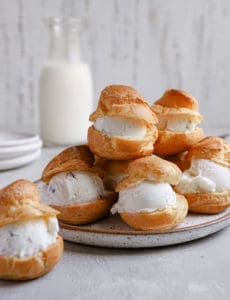
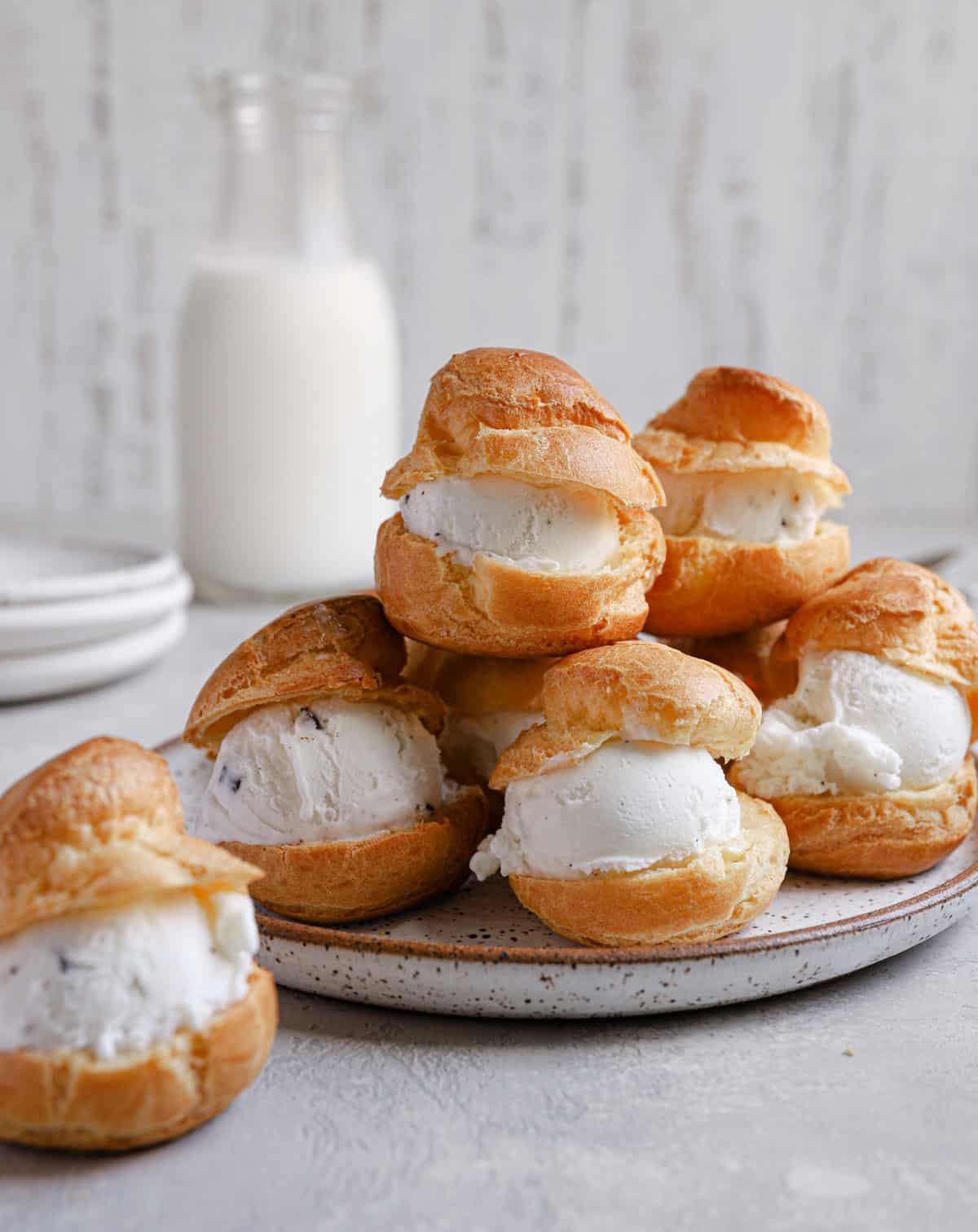
I’m sharing all my tips for making light as air pâte à choux. This delicate pastry makes airy pastry perfect for filling with sweet and savory stuffings. Learn everything you need to know about choux pastry from how to make, pipe, store, and fix some of the most common issues.
The Background
If you are not familiar with choux pastry, it’s a light and airy dough used to make desserts ranging from eclairs to churros and more. This unique dough is twice-baked, first on the stove, to create a silky smooth finish. Then it bakes to golden perfection in the oven.
Made with water, eggs, flour, and butter the pastry has a high moisture content which causes the pastry to rise and leave space for delicious fillings to be stuffed with pastry cream or other fun fillings. Once you’ve mastered making choux pastry, the delicious treats you can make are endless including:
- Eclairs: Pastry cream is piped into long logs and then filled with pastry cream and topped with chocolate.
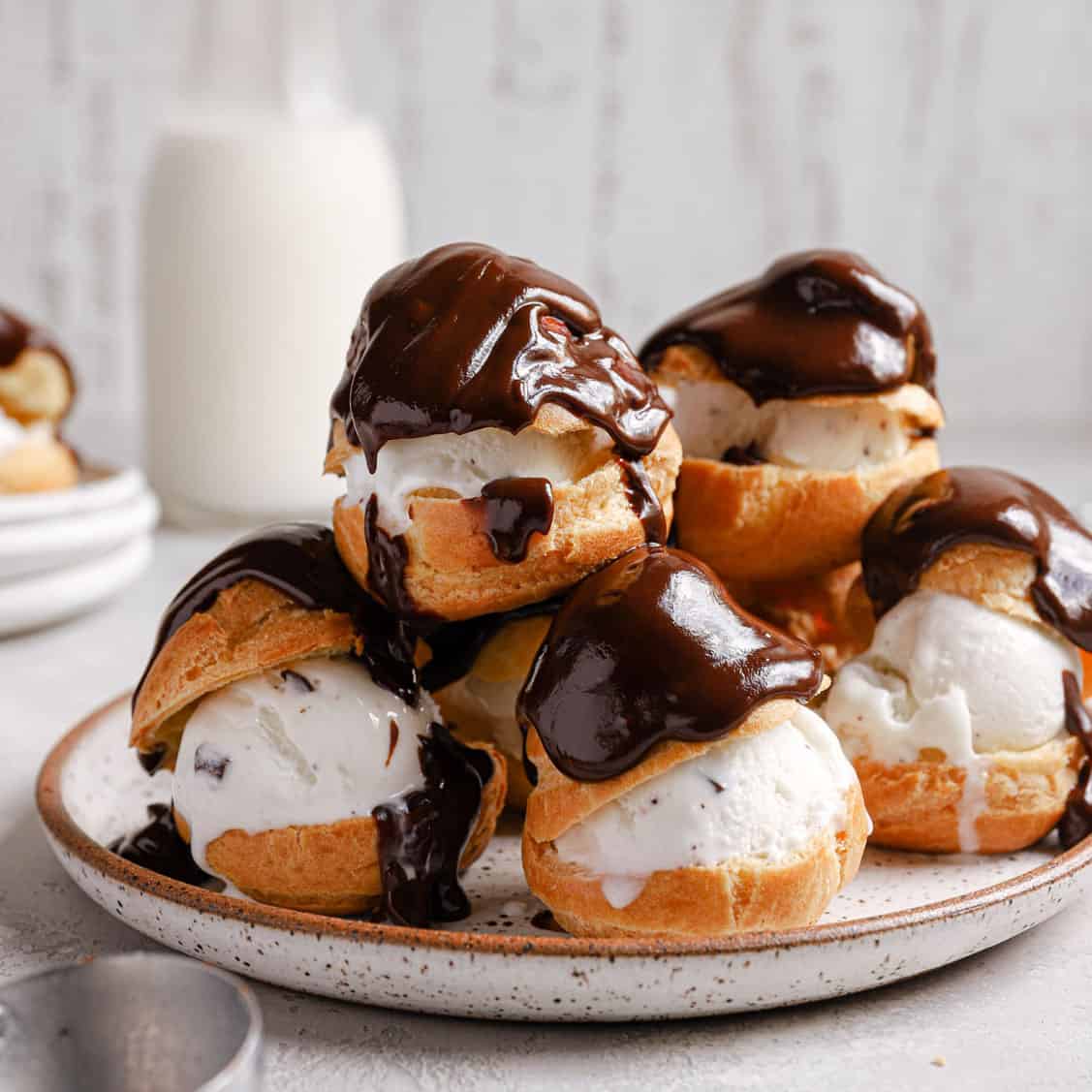
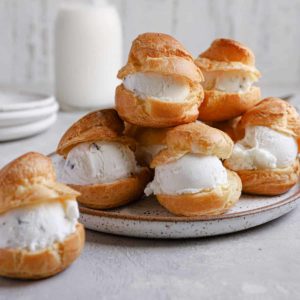
- Profiteroles: Also known as cream puffs, profiteroles are filled with pastry cream or ice cream. They often come served with a silky chocolate topping.
- Croquembouches: A cone-shaped tower made from choux pastry puffs baked and dipped in caramel binding the tower together.
- Gougeres: A savory appetizer made with choux pastry.
- Beignets: The dough is fried instead of baked into a type of fritter.
- Churros: Piped from a star-shaped nozzle and fried into a crispy treat.
Ingredients
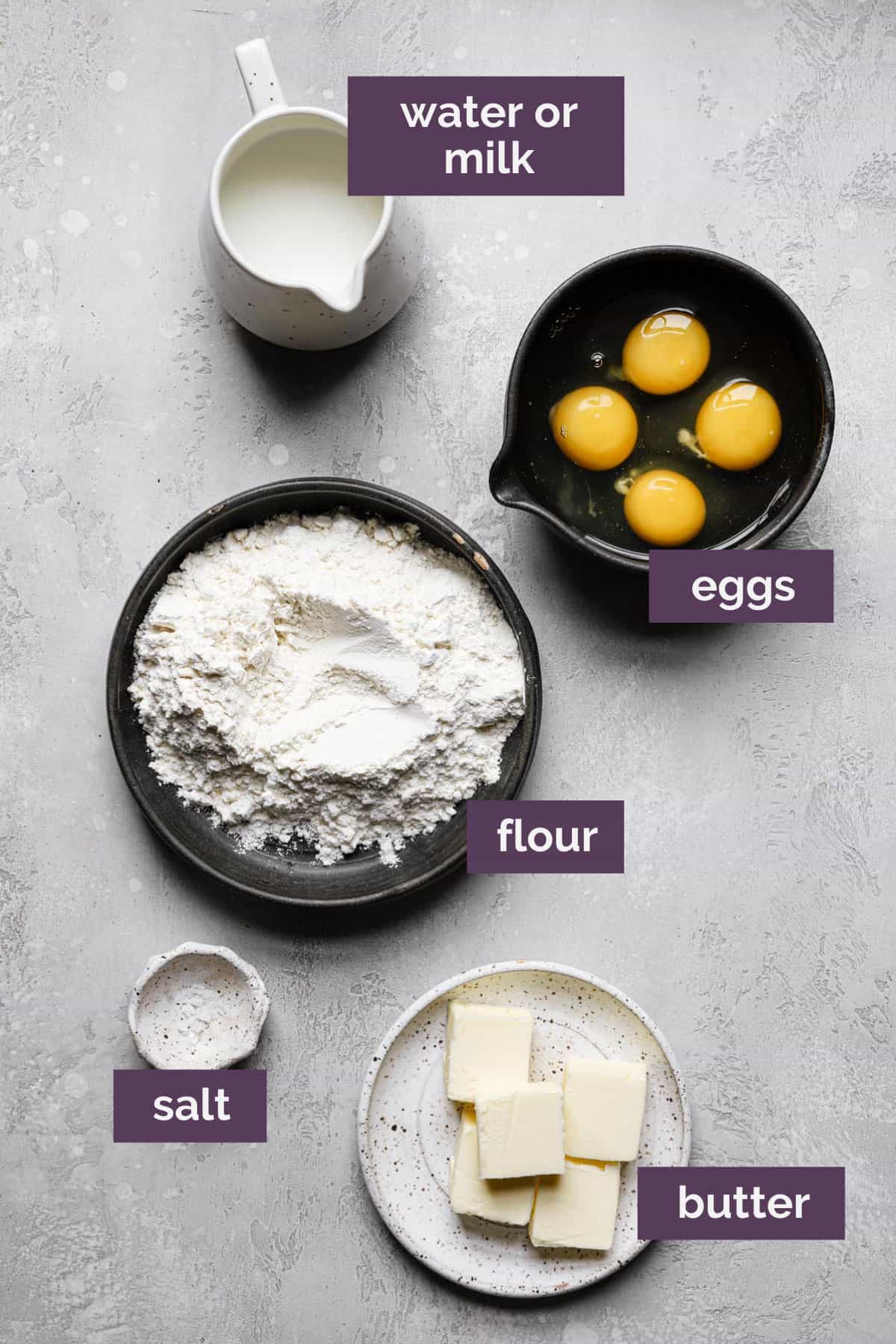
The beautiful thing about this dough is that it uses just a handful of pantry staple ingredients that you probably already have on hand.
- Milk: You can also use water or a combination of both water and milk. Depending on the final pastry you are making with the dough, one or the other may be called for in the recipe.
- Butter: During the baking process, this allows the pastry to rise.
- Salt: Gives a little flavor to the choux.
- Flour: Gives structure to the pastry.
- Eggs: Helps give the pastry structure and makes a crisp outer shell.
Step-by-Step Directions
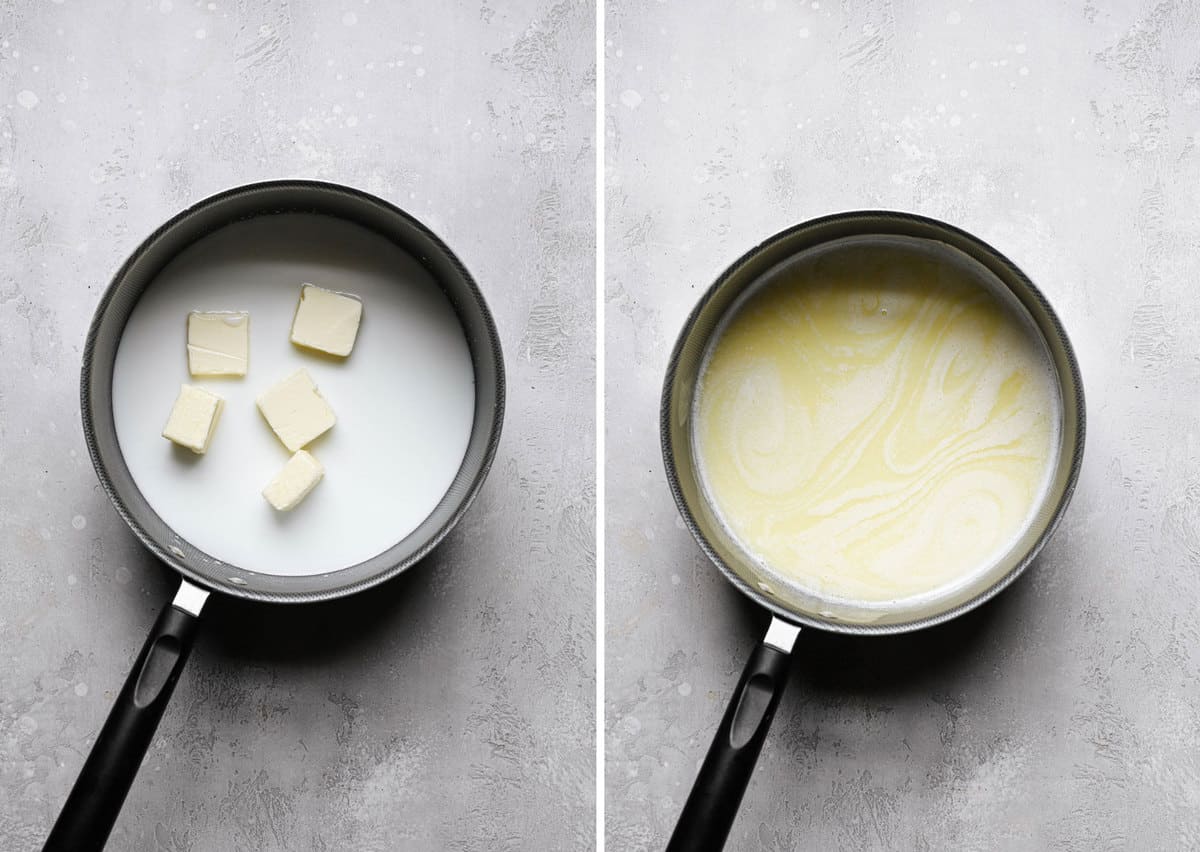
- Boil milk, butter, and salt: Place the water or milk, butter, and salt in a medium saucepan. Place over high heat and bring to a full rolling boil.
- Add the flour: Remove from the heat and add the flour all at once. Using a wooden spoon or a stiff silicone spatula, stir until the flour is thoroughly mixed in and no clumps remain, pressing and smashing the dough against the sides of the pan.
- Stir the dough together: Return the pot to medium-high heat and cook, stirring frequently until the dough comes together in one mass and there is a dry film on the bottom and sides of the pan.

- Check the temperature: If you have an instant-read thermometer the temperature of the dough should register at 175°F.
- Beat in a mixer: Transfer the dough to a mixing bowl and beat on medium speed for about 2 minutes to cool the dough down. Check the temperature again, it should read about 145°F.
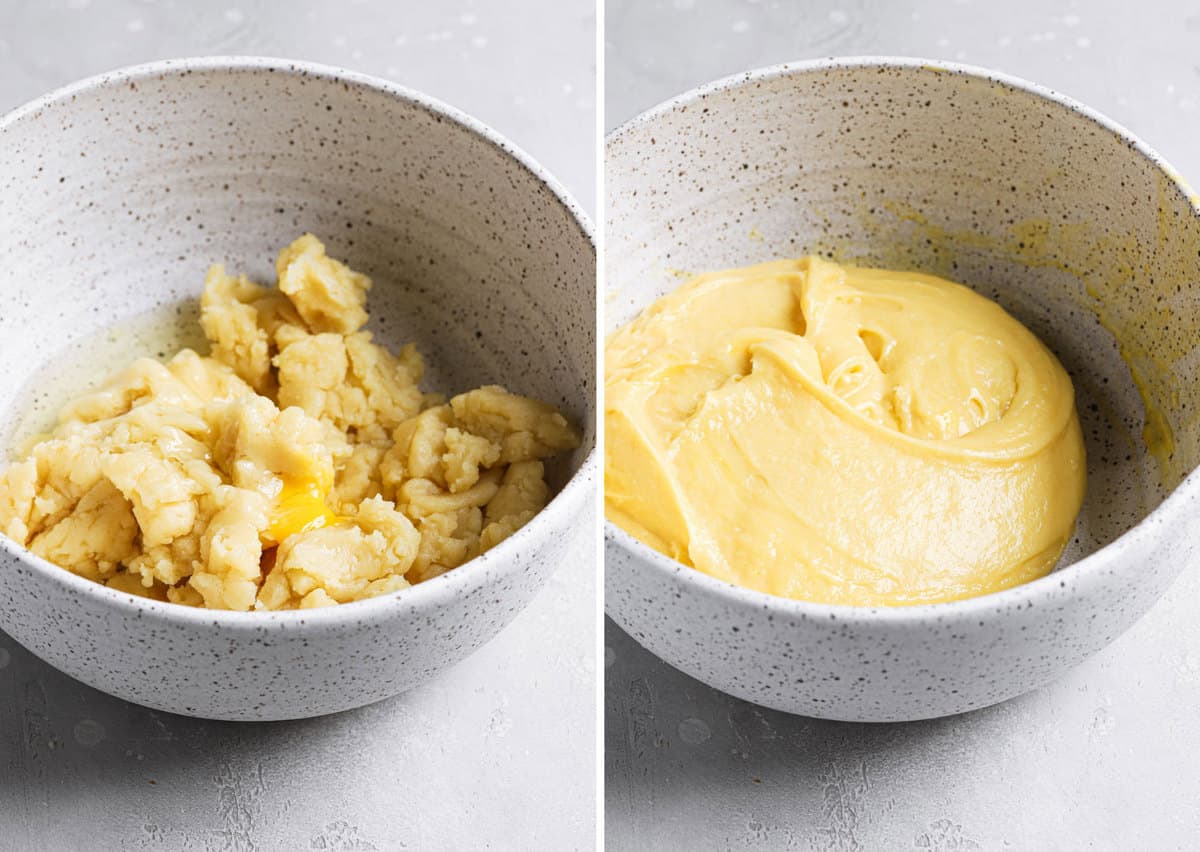
- Mix in eggs: Add the eggs one at a time, ensuring each one is fully incorporated before adding the next. Once all of the eggs have been added scrape down the bottom and sides of the bowl and mix again to ensure everything is fully incorporated for an additional 5 to 10 seconds.
Piping the Dough
Once you’ve made the dough, you will then need to determine what shape pastry you plan to make. I’ll give you directions for piping some of the most common choux pastry shapes.
-
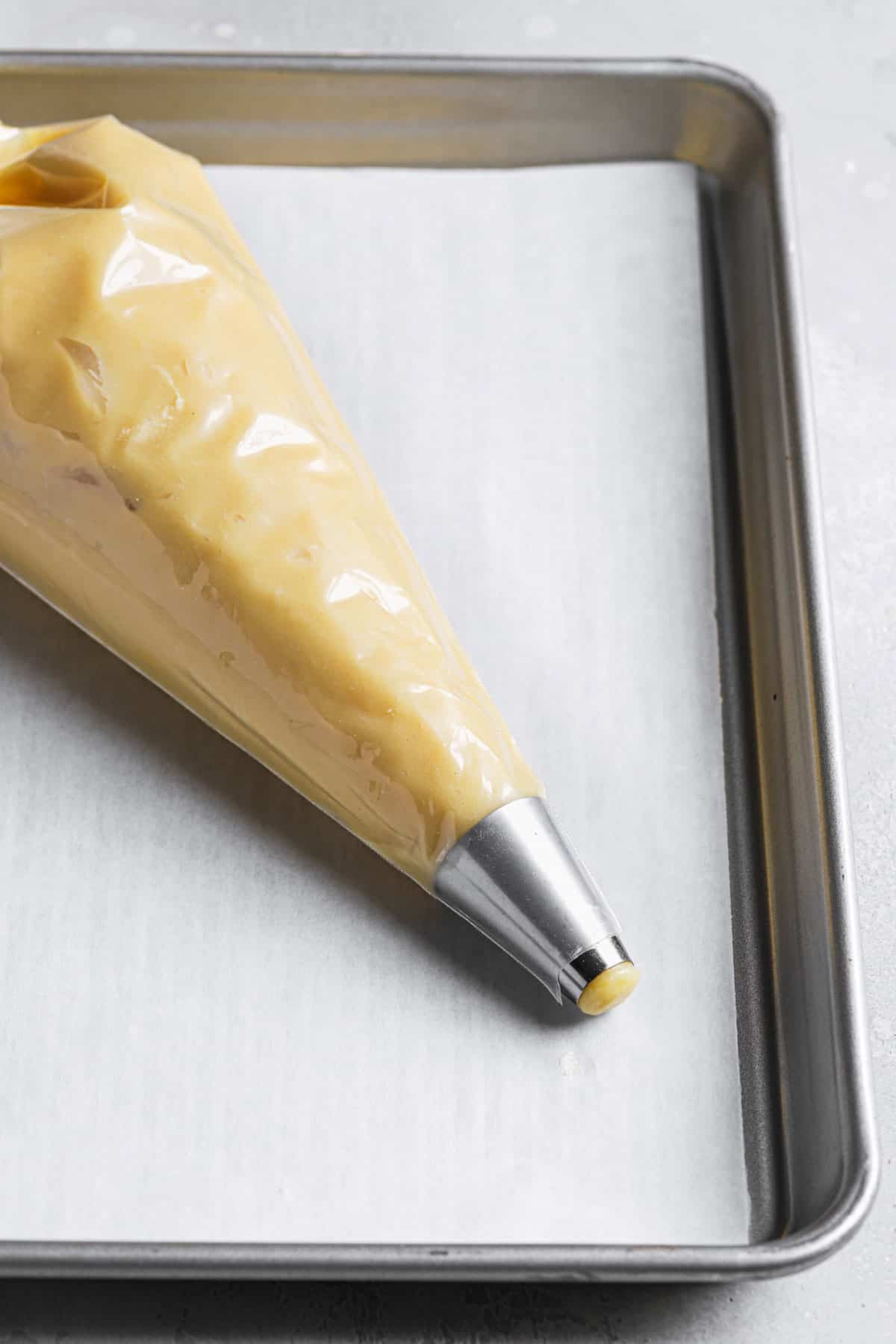
Round (for puffs)– Use a round 1/2-inch piping tip. Make sure the tip always touches the dough to prevent ripples. Hold the bag upright as you pipe the dough to ensure the pastry will rise upwards.
-
Elongated (for eclairs)– Use a round or French star tip pipe the dough out at a 45° angle and keep consistent pressure while you pipe.
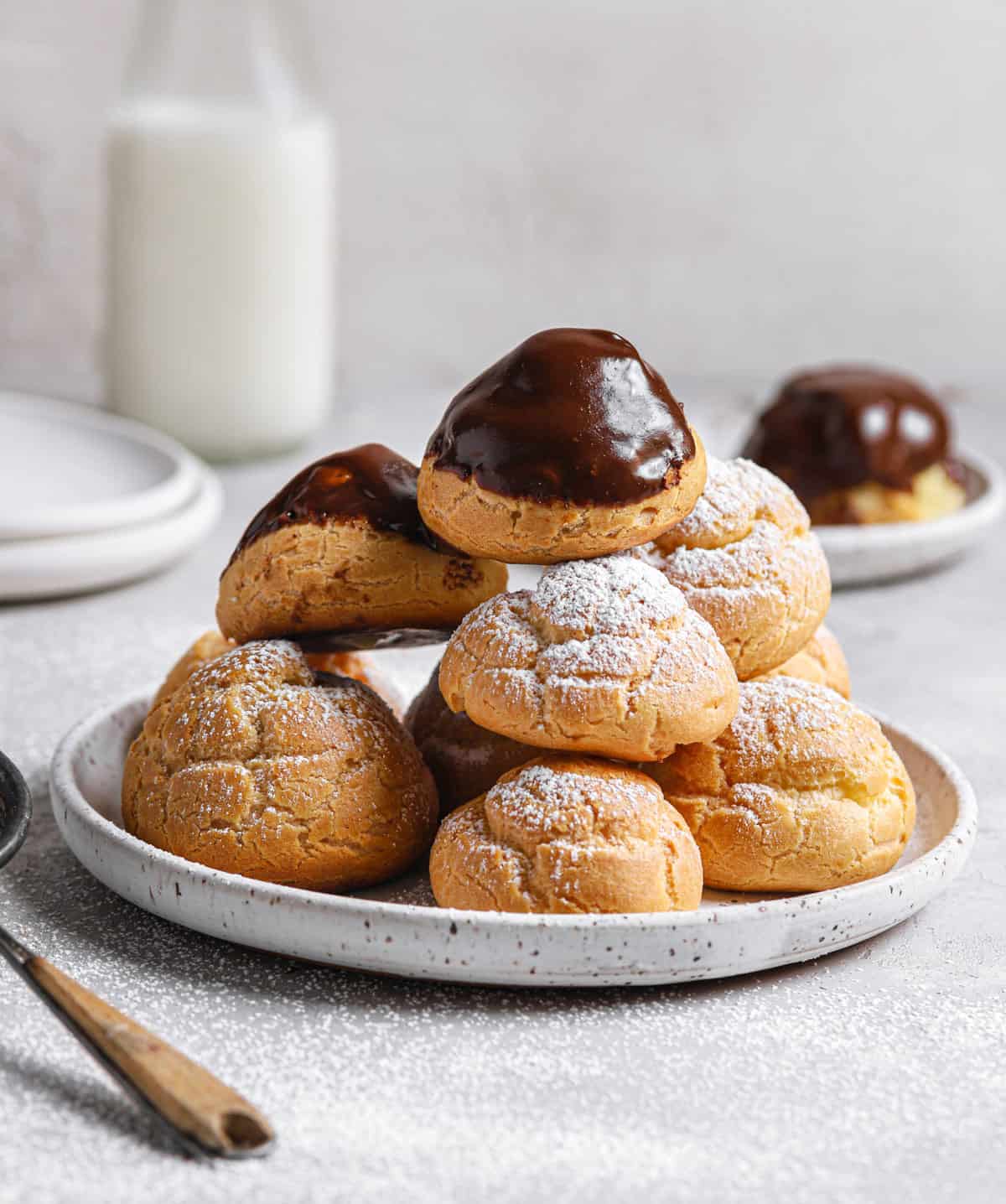
After piping the rounds and eclairs, be sure to dip your finger in water and flatten any points that might have been made with the pastry tip to prevent spots from burning.
Baking
After piping your pastry onto parchment paper, you are ready to bake these beauties!
Save This Recipe
Depending on the different pastry you plan to make your baking instructions will change.
Filling Options
Now, this is where you can really get creative with choux pastry. Since the dough is rather bland in flavor, you can really dress it up by stuffing it with many different fillings. Some of my favorite ways to fill baked pâte à choux include:
- Pastry cream
- Lemon curd
- Ice cream
- Homemade whipped cream
FAQ and Troubleshooting
Some of the most common issues surrounding choux pastry include runny dough and collapsed pastries. Let’s talk a little bit about why these issues occur, how you can prevent them, and ways to fix the issue if they happen.
Collapsed Pastry
There are two main reasons your pastry will collapse. The first is that the oven was opened before the choux cooked through. This happens when you open the oven to check on them before the cooking time is complete. I would suggest keeping the door closed the first 20 minutes of baking before peeking for a doneness check.
By opening the oven you allow the steam to escape preventing the exterior of the pastry from crisping up.
Choux pastry also collapses when you do not prick the baked pastry shells to vent the hot air from inside. If un-vented, the hot air adds moisture inside the pastry and causes it to collapse while cooling.
Making in Advance
- Store unfilled baked pastry shells in an airtight container for up to 2 days. Reheat them in the oven to crisp up and fill.
- Freeze baked pastry shells in an airtight container for up to 3 months, thaw, and bake to crisp up before filling.
What to Make with Pâte à Choux
Take on the art of making choux pastry at home with this in-depth guide. From making the dough to troubleshooting the biggest issues, this guide has you covered for all your pâte à choux needs!
Watch the Recipe Video Below:
If you make this recipe and love it, remember to stop back and give it a 5-star rating - it helps others find the recipe! ❤️️
Pate a Choux Recipe
Ingredients
- 1 cup (240 ml) milk or water, or combination
- 6 tablespoons (85 g) unsalted butter, cut into ½-inch cubes
- ½ teaspoon (0.5 teaspoon) kosher salt
- 1 cup (120 g) all-purpose flour, sifted
- 4 eggs
Instructions
- Place the water or milk, butter, and salt in a medium saucepan. Place over high heat and bring to a full rolling boil.
- Remove from the heat and add the flour all at once. Using a wooden spoon or stiff silicone spatula and stir until the flour is thoroughly mixed in and no lumps remain, pressing and smashing the dough against the sides of the pan.
- Return the pot to medium-high heat and cook, stirring frequently, until the dough comes together into one mass and there is a dry film on the bottom and sides of the pan. If you have an instant-read thermometer, it should register 175 degrees F.
- Transfer the dough to a mixing bowl and beat on medium speed for about 2 minutes to cool the dough down. It should register 145 degrees on an instant-read thermometer.
- Add the eggs one at a time, ensuring each one is fully incorporated before adding the next. Once all of the eggs have been added, scrape down the bottom and sides of the bowl and mix again to ensure everything is fully incorporated, an additional 5 to 10 seconds.
- Use immediately or keep at room temperature for up to 2 hours in a piping bag or with a piece of plastic wrap pressed against the surface.
Notes
- Make the Dough By Hand: You do not need a mixer to make this dough; I often make it by hand. Cool it down by stirring it frequently with a spoon or spatula, then beat in each egg one at a time by hand.
Did you make this recipe?
Leave a review below, then snap a picture and tag @thebrowneyedbaker on Instagram so I can see it!
Photography by Dee Frances



Just tried making pate a choux for the first time following this recipe, and it turned out better than expected! The step-by-step instructions really helped me understand the technique. Though I have to admit, hosting a pastry class for my team sounds like a fun challenge. Speaking of bringing people together, I’ve been looking for good icebreaker activities for our monthly meetings. Has anyone tried using game-based activities to warm up conversations? Would love to hear what works for group settings!
This is such a comprehensive guide to making pâte à choux! The step-by-step instructions and troubleshooting tips are incredibly helpful. I love how you explain the science behind why the dough works – it really helps understand the process. Can’t wait to try making cream puffs this weekend!
This guide is fantastic! I love how you break down the science behind pâte à choux’s airy texture—it makes the process feel so approachable. As someone who uses AI tools like imagetoimagemaker.com to visualize recipe ideas, I can already picture turning these beautiful pastries into digital art for inspiration. Can’t wait to try making profiteroles with your tips!
You can use Aifoto,a free ai tools.
You can use Aifoto,a free ai tools.
You can use Aifoto,a free ai tools.
You can use Aifoto,a free ai tools.
This guide is fantastic! I love how you break down the science behind pâte à choux—the explanation of how moisture creates that perfect airy interior really clicked for me. Your tips on piping and troubleshooting are exactly what a home baker needs. It’s inspiring to see such detailed, creative guidance; as someone who uses AI tools like imagetoimagemaker.com to explore visual ideas, I appreciate that same thoughtful approach applied to pastry. Can’t wait to try making eclairs this weekend!
This pâte à choux recipe is perfect! Your step-by-step instructions make it so much easier to tackle this classic French pastry.
For organizing baking recipes or comparing ingredient lists, I use Compare Lists. It’s a free tool that instantly compares two lists. Perfect for managing recipe variations or tracking baking supplies.
Thanks for sharing such detailed instructions!
lip sync ai visual platform combines audio-driven lip sync and facial animation in a single workflow.
Using milk instead of water for extra richness and your tip about cutting the butter into 1/2-inch cubes are so helpful for getting that perfect light-as-air texture in pâte à choux. I’ve been playing with dessert presentation ideas for my pet-themed bakes over on https://petportraithub.com, and these 2-inch puffs would make such a fun base for little “pet” profiterole designs.
This looks absolutely delicious! I love how you break down the steps so clearly. Can’t wait to try making Basic Pâte à Choux Recipe this weekend.
This post sounds amazing! I’ve always wanted to try making pâte à choux. Knowing it’s perfect for eclairs and cream puffs gets me even more excited. I’m definitely saving this one to try out in my own kitchen! Thanks for sharing the recipe and tips.
https://mewgenics.co
This Pâte à Choux recipe is incredibly detailed and helpful! As someone who runs ShipGrowth, a directory for AI tools, I appreciate well-structured guides that make complex processes easy to understand. Looking forward to trying this out!
Fantastic pâte à choux walkthrough. The notes about drying the dough and checking consistency before adding all the eggs are exactly the details that usually make or break first attempts. I also appreciate the practical piping tips and the warning about opening the oven too early. This is one of the clearest guides I’ve seen for beginners.
This pate a choux tutorial is incredibly thorough — from the dough technique to filling the eclairs! I follow e-commerce trends at SellsLetter (sellsletter.com) for Amazon, Shopify, and TikTok Shop sellers, and specialty baking tools like piping sets and eclair molds have been trending on multiple platforms. Your step-by-step approach makes even advanced techniques feel approachable!
IELTSWritingAI helps users improve IELTS writing with AI-powered essay grading, feedback, and sample essays to boost scores efficiently. https://ieltswriting.ai/
Great post! I really enjoyed reading through your perspective on this, and it gave me a few new ideas to think about. It’s always refreshing to find content that adds actual value rather than just repeating what everyone else is saying. I’ll definitely be keeping an eye out for your future updates. Thanks again for the insight!
I have been making pate a choux for years but your recipe is so clear and easy to follow. Love how you break down each step! Just made a batch of profiteroles and they turned out perfectly. Thank you!
The detailed piping instructions here saved me from another batch of lopsided cream puffs, and I finally understand why my previous attempts deflated instead of puffing up light and airy. Michelle’s troubleshooting tips for getting the dough consistency right before adding eggs are truly game-changing for nailing that delicate texture. I recently came across some complementary techniques at https://nana-banana.org/ that might help anyone struggling with the piping stage.
This is such a comprehensive guide to making pâte à choux! The step-by-step photos are incredibly helpful. I love how you explain the science behind why the dough works – it really helps understand the process. Can’t wait to try making cream puffs this weekend!
This is such a thorough guide to making pate a choux! I love how you’ve broken down each step so clearly. Mastering this dough really does open up a whole world of pastry possibilities. I always find it helpful to save detailed recipes like this in a recipe management app so I can refer back to them while cooking. Thanks for sharing such a comprehensive tutorial!
Finally tried this over the weekend after bookmarking it months ago and I’m honestly shocked at how well they turned out for a first attempt. The temperature checkpoints were a lifesaver — I never would have thought to use my instant-read thermometer on dough but hitting that 175°F before transferring to the mixer made such a difference. My puffs actually puffed! The only issue I had was a few of them cracked on top, which I think happened because I didn’t smooth down the points well enough after piping. Second batch I wet my finger like you said and they came out way cleaner. I was so proud of them that I took a photo of each step from the sad-looking raw dough to the finished cream puffs and made a before-and-after GIF (sped it up on gifspeed.com so the whole transformation plays in like 4 seconds). Sent it to my sister who’s in pastry school and even she was impressed. Going to try eclairs next using the pastry cream recipe you linked. Thanks Michelle, this tutorial is genuinely one of the best I’ve found online.
very delicious cake
Wow this sounds super. It’s the beginning of hunting season and we are hoping to get a lot of deer meat-cant wait to try your recipe.
Yours is the only recipe I ise for this! Consistently perfect every time
This is a very helpful post for me. I’m very grateful that you shared this with me and everyone else quordle game
I just wanted to say thank you for your detailed recipe. I knew how to make them, but I was always missing the extra tips and tricks to know the dough would turn out right. Your recipe was great for that!
Am I missing the baking instructions? Thanks.
Hi Genola, For cream puffs, follow this recipe: https://www.browneyedbaker.com/homemade-cream-puffs/
For eclairs, follow this recipe: https://www.browneyedbaker.com/eclairs-and-cream-puffs/
Yummy. Excellent.
Nice detail, and great pics. Thanks for sharing!