

Basic Pâte à Choux Recipe
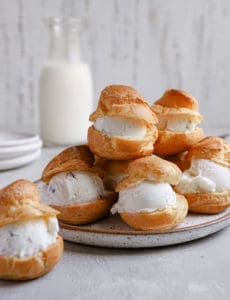
I’m sharing all my tips for making light as air pâte à choux. This delicate pastry makes airy pastry perfect for filling with sweet and savory stuffings. Learn everything you need to know about choux pastry from how to make, pipe, store, and fix some of the most common issues.
The Background
If you are not familiar with choux pastry, it’s a light and airy dough used to make desserts ranging from eclairs to churros and more. This unique dough is twice-baked, first on the stove, to create a silky smooth finish. Then it bakes to golden perfection in the oven.
Made with water, eggs, flour, and butter the pastry has a high moisture content which causes the pastry to rise and leave space for delicious fillings to be stuffed with pastry cream or other fun fillings. Once you’ve mastered making choux pastry, the delicious treats you can make are endless including:
- Eclairs: Pastry cream is piped into long logs and then filled with pastry cream and topped with chocolate.
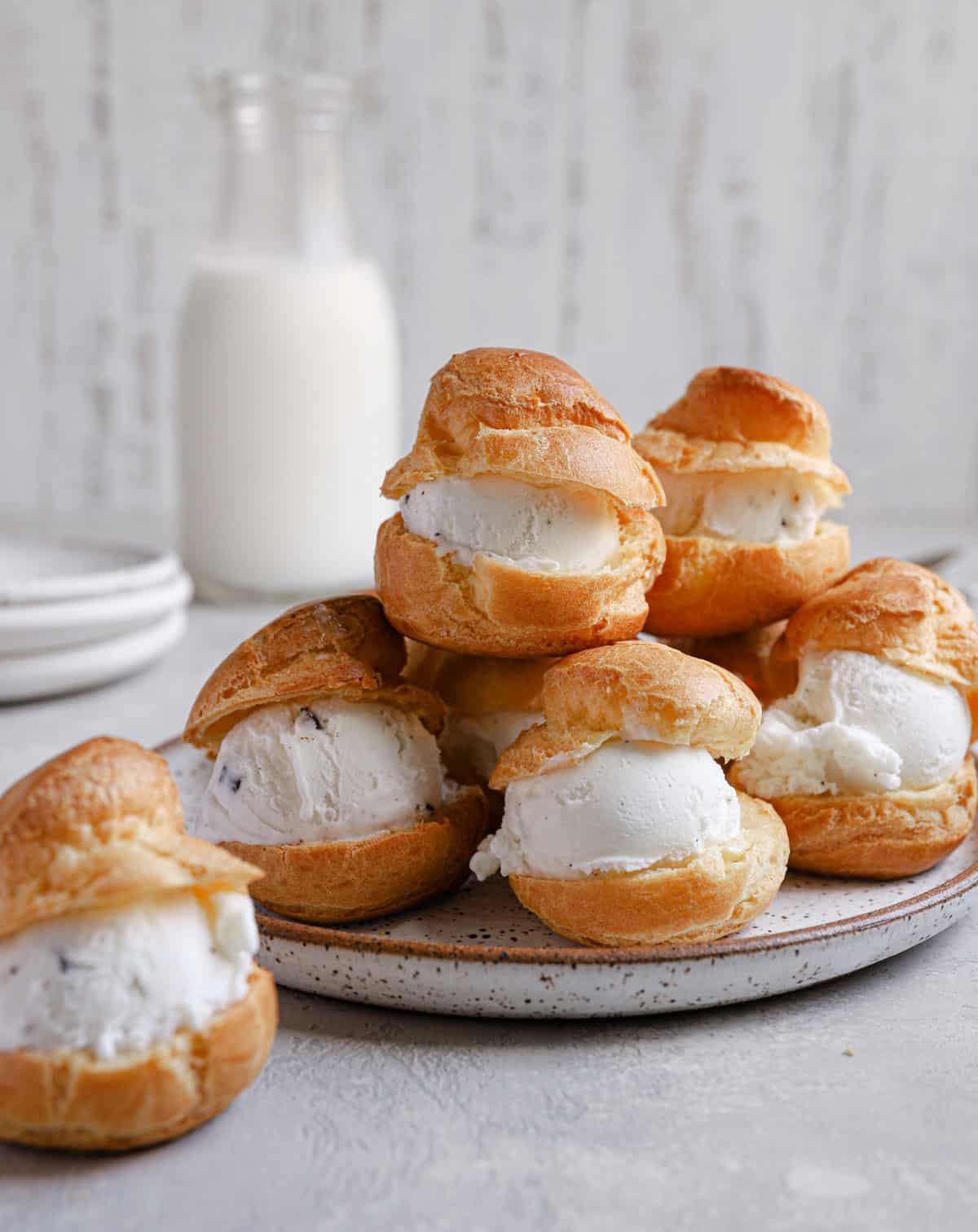
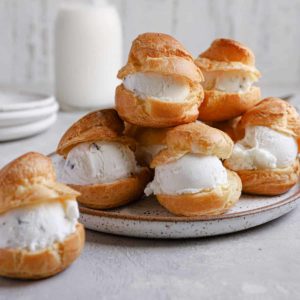
- Profiteroles: Also known as cream puffs, profiteroles are filled with pastry cream or ice cream. They often come served with a silky chocolate topping.
- Croquembouches: A cone-shaped tower made from choux pastry puffs baked and dipped in caramel binding the tower together.
- Gougeres: A savory appetizer made with choux pastry.
- Beignets: The dough is fried instead of baked into a type of fritter.
- Churros: Piped from a star-shaped nozzle and fried into a crispy treat.
Ingredients
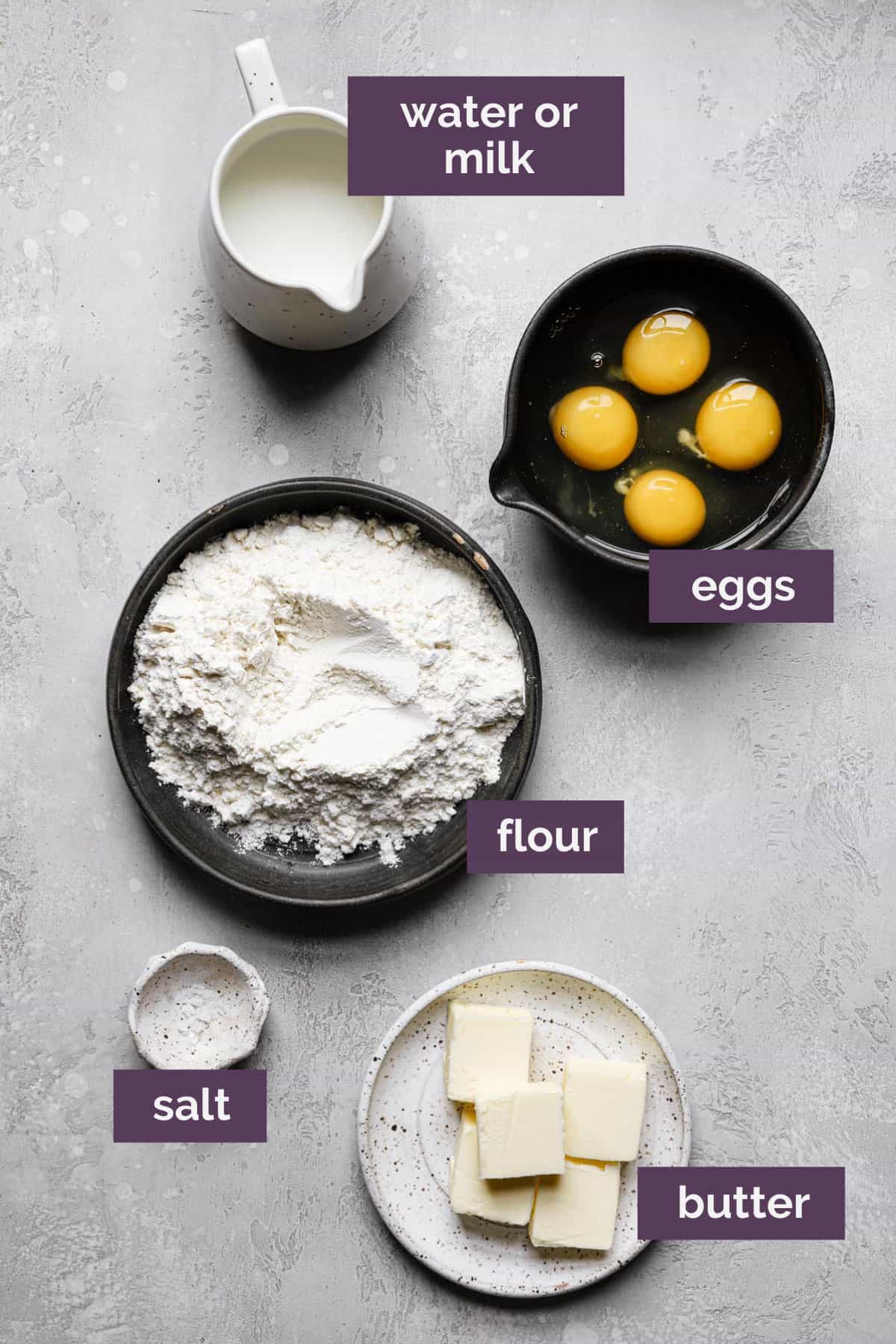
The beautiful thing about this dough is that it uses just a handful of pantry staple ingredients that you probably already have on hand.
- Milk: You can also use water or a combination of both water and milk. Depending on the final pastry you are making with the dough, one or the other may be called for in the recipe.
- Butter: During the baking process, this allows the pastry to rise.
- Salt: Gives a little flavor to the choux.
- Flour: Gives structure to the pastry.
- Eggs: Helps give the pastry structure and makes a crisp outer shell.
Step-by-Step Directions
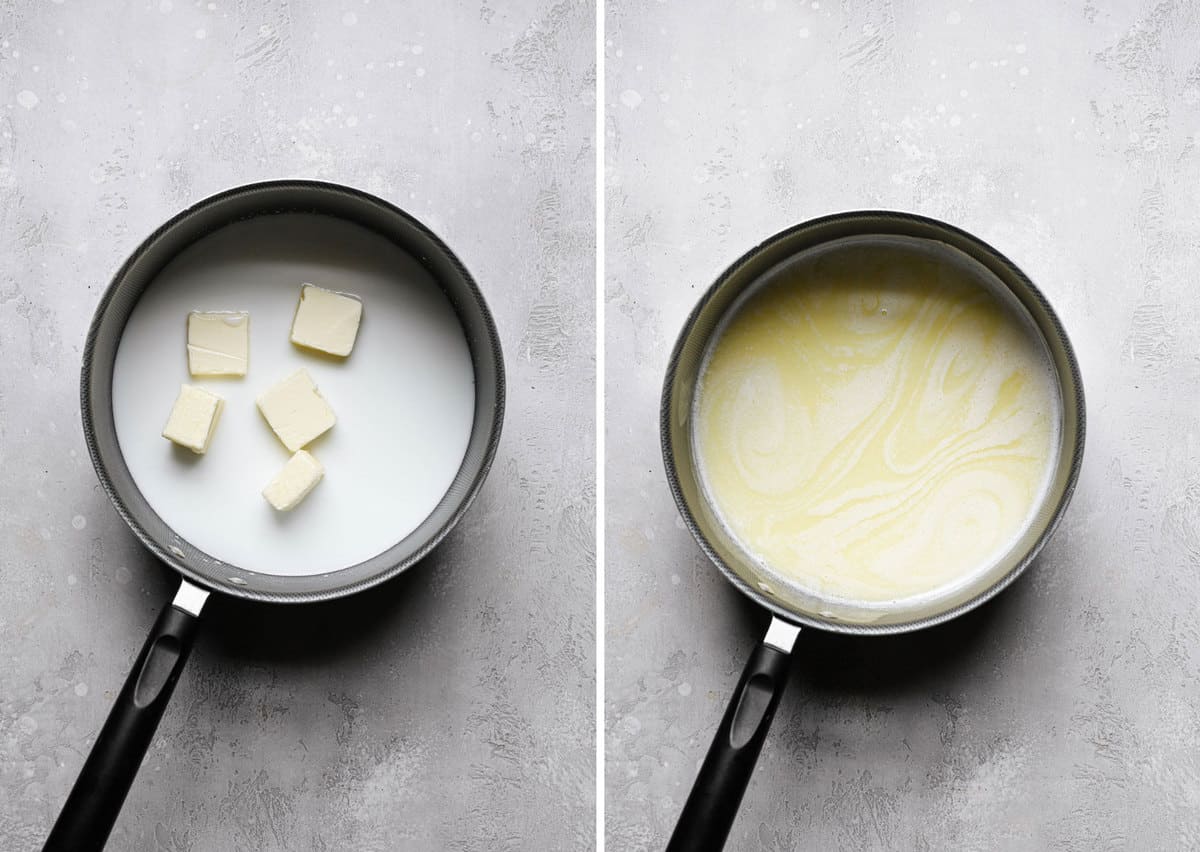
- Boil milk, butter, and salt: Place the water or milk, butter, and salt in a medium saucepan. Place over high heat and bring to a full rolling boil.
- Add the flour: Remove from the heat and add the flour all at once. Using a wooden spoon or a stiff silicone spatula, stir until the flour is thoroughly mixed in and no clumps remain, pressing and smashing the dough against the sides of the pan.
- Stir the dough together: Return the pot to medium-high heat and cook, stirring frequently until the dough comes together in one mass and there is a dry film on the bottom and sides of the pan.

- Check the temperature: If you have an instant-read thermometer the temperature of the dough should register at 175°F.
- Beat in a mixer: Transfer the dough to a mixing bowl and beat on medium speed for about 2 minutes to cool the dough down. Check the temperature again, it should read about 145°F.
- Mix in eggs: Add the eggs one at a time, ensuring each one is fully incorporated before adding the next. Once all of the eggs have been added scrape down the bottom and sides of the bowl and mix again to ensure everything is fully incorporated for an additional 5 to 10 seconds.
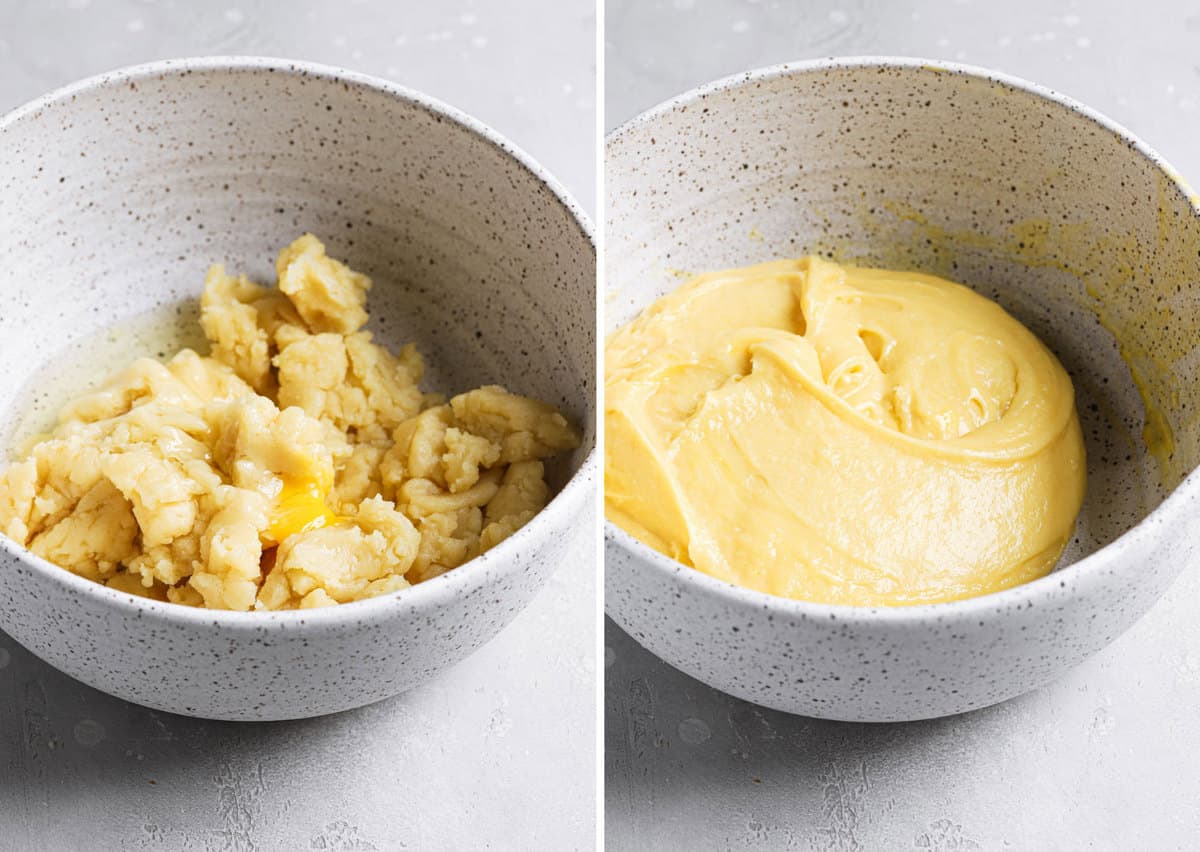
Piping the Dough
Once you’ve made the dough, you will then need to determine what shape pastry you plan to make. I’ll give you directions for piping some of the most common choux pastry shapes.
-
Round (for puffs)– Use a round 1/2-inch piping tip. Make sure the tip always touches the dough to prevent ripples. Hold the bag upright as you pipe the dough to ensure the pastry will rise upwards.
-
Elongated (for eclairs)– Use a round or French star tip pipe the dough out at a 45° angle and keep consistent pressure while you pipe.
After piping the rounds and eclairs, be sure to dip your finger in water and flatten any points that might have been made with the pastry tip to prevent spots from burning.
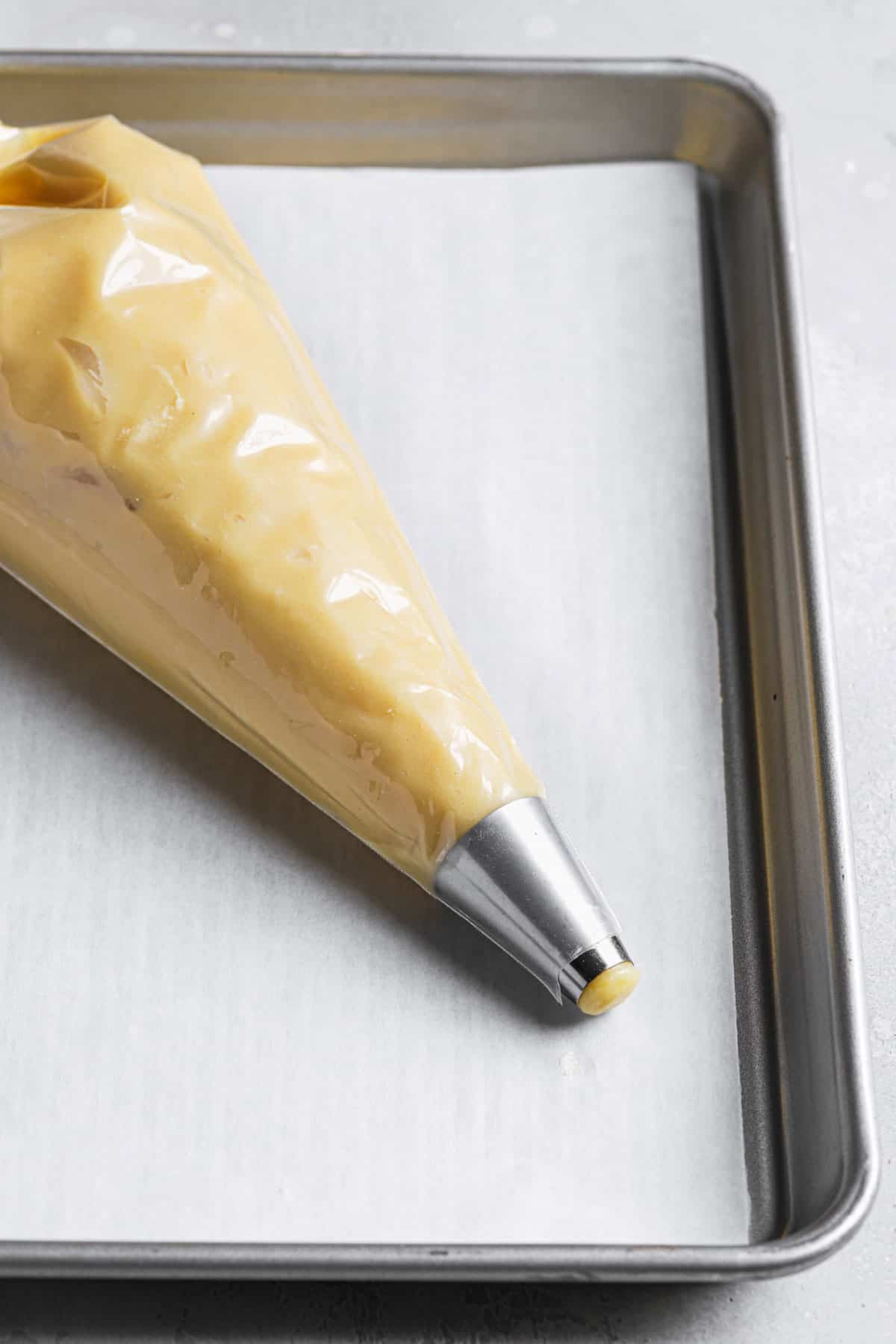
Baking
After piping your pastry onto parchment paper, you are ready to bake these beauties!
Save This Recipe
Depending on the different pastry you plan to make your baking instructions will change.
Filling Options
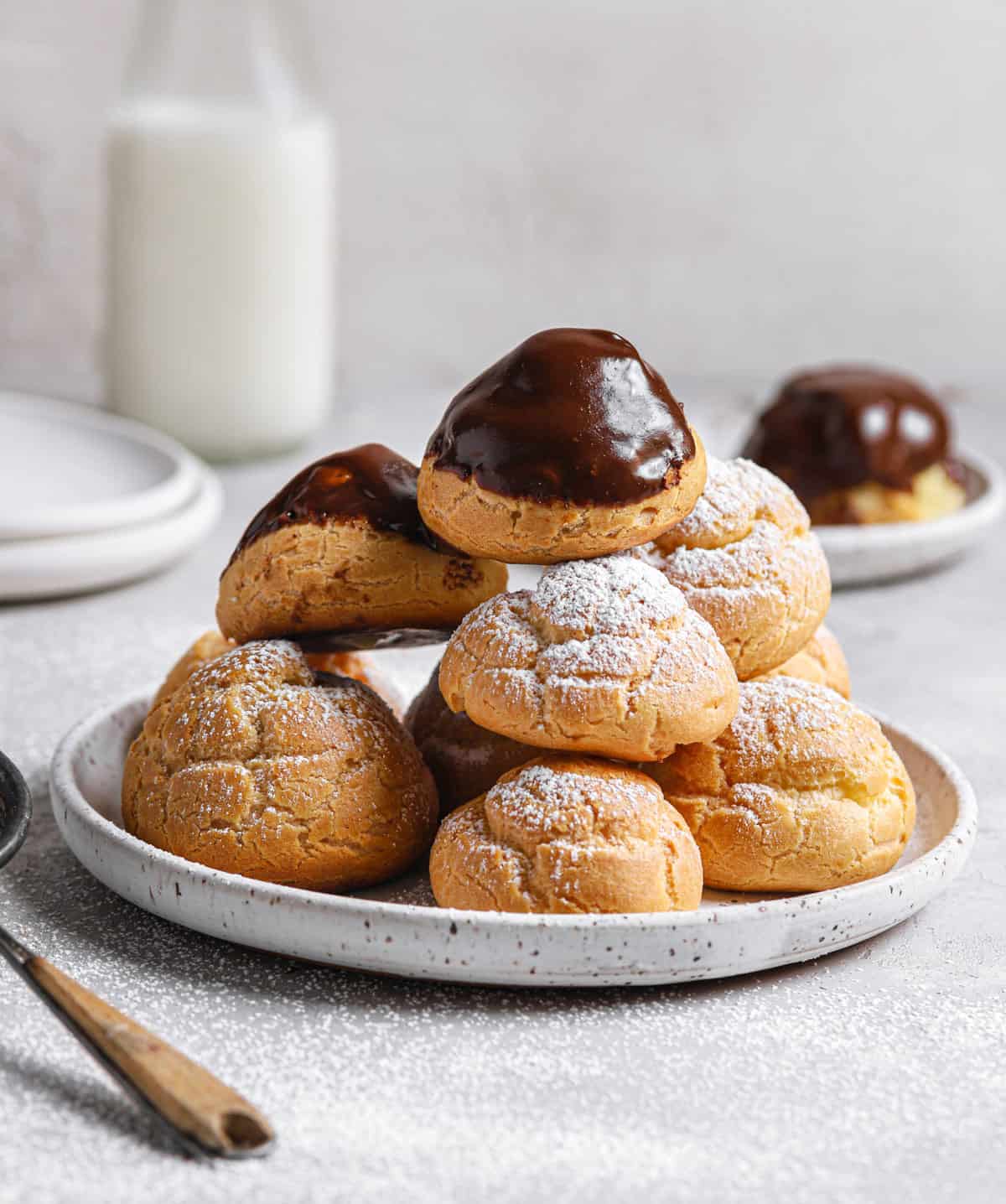
Now, this is where you can really get creative with choux pastry. Since the dough is rather bland in flavor, you can really dress it up by stuffing it with many different fillings. Some of my favorite ways to fill baked pâte à choux include:
- Pastry cream
- Lemon curd
- Ice cream
- Homemade whipped cream
FAQ and Troubleshooting
Some of the most common issues surrounding choux pastry include runny dough and collapsed pastries. Let’s talk a little bit about why these issues occur, how you can prevent them, and ways to fix the issue if they happen.
Collapsed Pastry
There are two main reasons your pastry will collapse. The first is that the oven was opened before the choux cooked through. This happens when you open the oven to check on them before the cooking time is complete. I would suggest keeping the door closed the first 20 minutes of baking before peeking for a doneness check.
By opening the oven you allow the steam to escape preventing the exterior of the pastry from crisping up.
Choux pastry also collapses when you do not prick the baked pastry shells to vent the hot air from inside. If un-vented, the hot air adds moisture inside the pastry and causes it to collapse while cooling.
Making in Advance
- Store unfilled baked pastry shells in an airtight container for up to 2 days. Reheat them in the oven to crisp up and fill.
- Freeze baked pastry shells in an airtight container for up to 3 months, thaw, and bake to crisp up before filling.
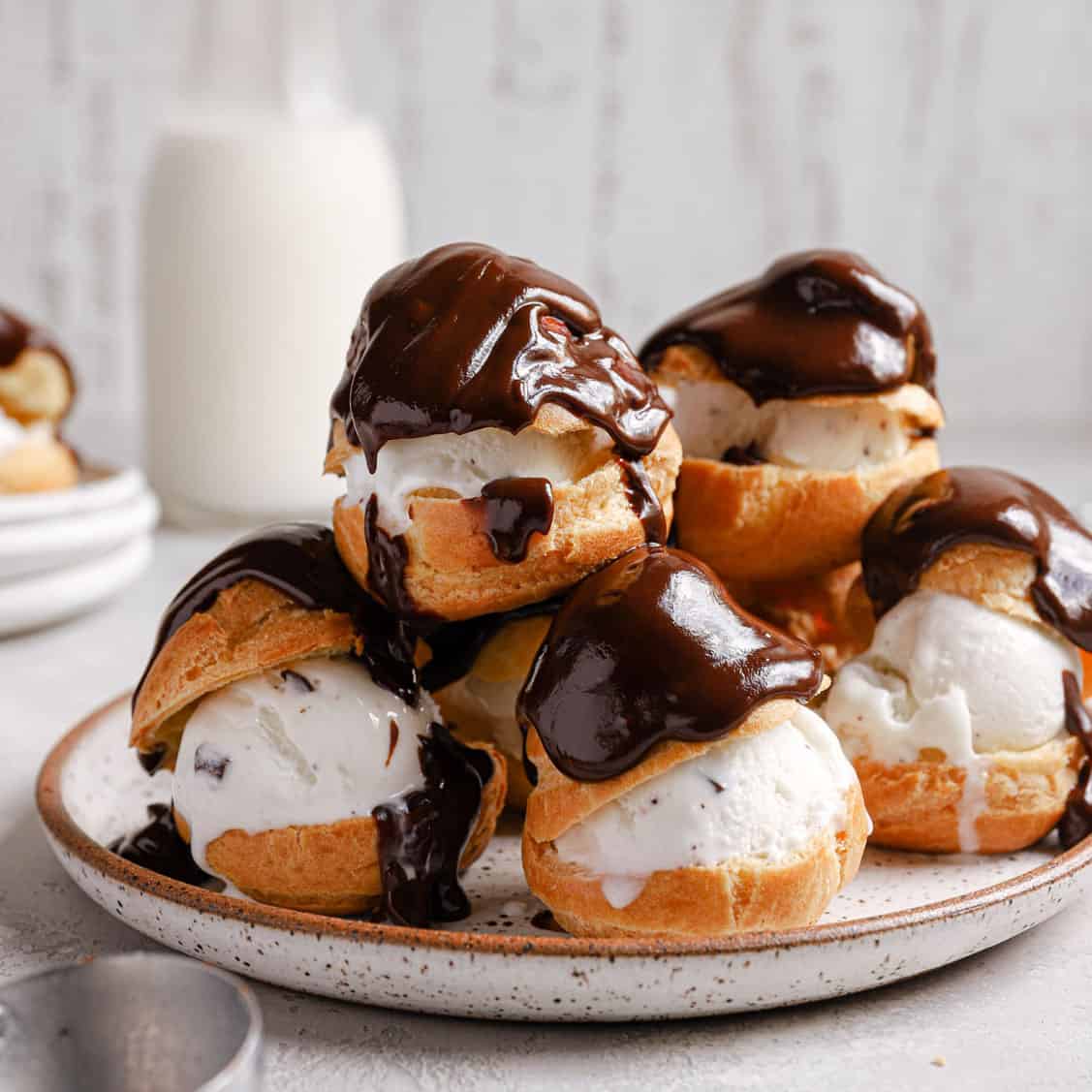
What to Make with Pâte à Choux
Take on the art of making choux pastry at home with this in-depth guide. From making the dough to troubleshooting the biggest issues, this guide has you covered for all your pâte à choux needs!
Watch the Recipe Video Below:
If you make this recipe and love it, remember to stop back and give it a 5-star rating - it helps others find the recipe! ❤️️
Pate a Choux Recipe
Ingredients
- 1 cup (240 ml) milk or water, or combination
- 6 tablespoons (85 g) unsalted butter, cut into ½-inch cubes
- ½ teaspoon (0.5 teaspoon) kosher salt
- 1 cup (120 g) all-purpose flour, sifted
- 4 eggs
Instructions
- Place the water or milk, butter, and salt in a medium saucepan. Place over high heat and bring to a full rolling boil.
- Remove from the heat and add the flour all at once. Using a wooden spoon or stiff silicone spatula and stir until the flour is thoroughly mixed in and no lumps remain, pressing and smashing the dough against the sides of the pan.
- Return the pot to medium-high heat and cook, stirring frequently, until the dough comes together into one mass and there is a dry film on the bottom and sides of the pan. If you have an instant-read thermometer, it should register 175 degrees F.
- Transfer the dough to a mixing bowl and beat on medium speed for about 2 minutes to cool the dough down. It should register 145 degrees on an instant-read thermometer.
- Add the eggs one at a time, ensuring each one is fully incorporated before adding the next. Once all of the eggs have been added, scrape down the bottom and sides of the bowl and mix again to ensure everything is fully incorporated, an additional 5 to 10 seconds.
- Use immediately or keep at room temperature for up to 2 hours in a piping bag or with a piece of plastic wrap pressed against the surface.
Notes
- Make the Dough By Hand: You do not need a mixer to make this dough; I often make it by hand. Cool it down by stirring it frequently with a spoon or spatula, then beat in each egg one at a time by hand.
Did you make this recipe?
Leave a review below, then snap a picture and tag @thebrowneyedbaker on Instagram so I can see it!
Photography by Dee Frances



Thanks to the author for the practical tips. I’ve been playing with higsfield ai (https://higsfield.com/) for ai video concepts, and it’s surprisingly good for rough scene ideas.
Thanks for the author’s perspective—really helpful. I’ve been using Reverse Image Search ( https://sherlock-search.net/ ) as a basic safety step before meeting someone, and it’s surprising what you can catch.
You wrote that really well. Been messing around with luma dream ( https://luma-dream-machine.com/ ) lately and it’s honestly the fastest way I’ve found to turn a random idea into something watchable.
This guide is so thorough, especially the section on why the dough needs to be dry enough before baking to get that hollow center. I tried making éclairs last weekend and they collapsed because I was afraid to cook the mixture long enough on the stove, but your tips about the film forming in the pan really helped clarify that step. It’s amazing how such simple ingredients like water, butter, flour, and eggs can create something as versatile as choux for both sweet and savory fillings. unblur image online free
I love that this recipe uses a simple combination of ingredients like milk, butter, and eggs to create a light and airy pâte à choux, I’ll have to try it out and share my results on https://max-h3.com!
The detail about choux being twice-baked—first on the stove, then in the oven—really helps explain why it puffs up so well. I’ve had my share of deflated cream puffs, so the troubleshooting tips for common issues are much appreciated. Looking forward to trying gougères next. I also found image extender useful when checking related examples.
This guide is fantastic—choux pastry has always felt intimidating, but your step-by-step temperature checks and piping tips make it feel achievable. I especially appreciate the troubleshooting notes for common issues. For anyone who loves the visual side of baking, I recently came across a tool that turns a simple photo or text prompt into a downloadable 3D model right in the browser. It could be a fun way to prototype custom cake toppers or pastry displays before piping. You can try it at gpt3d.net. Thanks for another thorough, reliable recipe!
I’ve made cream puffs a few times but always used water, so the note about milk versus water depending on what you’re making caught my attention — does the milk version brown faster in the oven? Also glad you mentioned the stovetop step, because the first time I made choux I panicked when the dough turned into a smooth ball and thought I’d ruined it. Definitely saving this for my next batch of gougères.
faceless reels
I’ve made choux a few times and always struggled with them deflating after I take them out of the oven, so the section on fixing common issues is exactly what I needed. Never thought about the water vs milk thing either — does using all milk make them noticeably richer? Gonna try the gougères version this weekend since I’ve only ever done sweet fillings.
faceless reels
Making choux pastry can be so intimidating, but your tips on piping and fixing common mistakes are super helpful. I’m actually planning to make some cream puffs this weekend, and I might even try to Create video from image of the final batch to share with my baking friends!
Nice write-up, thanks. I recently tried a motu patlu ai and was surprised how well it worked.
This is a great breakdown of pâte à choux! I’ve always found it a bit intimidating, but seeing the steps laid out so clearly makes me want to try it. I remember struggling with some pastry recipes before, and I found some helpful tips on Size It Up that might apply here.
This guide on pâte à choux is incredibly thorough—the temperature checks and piping tips are exactly the kind of detail that makes choux pastry foolproof. I’ve been experimenting with éclairs and cream puffs myself, and getting that perfect rise and hollow center really comes down to technique. For anyone who also enjoys the visual side of baking, I’ve found gptimage3.app useful for generating high-resolution (up to 4K) reference images of pastries and plating ideas across 16 aspect ratios. It’s a nice companion when you want to sketch out a dessert presentation before piping. Happy baking!
This is such a clear guide to pâte à choux — the explanation of how the high moisture content makes the pastry rise and create space for fillings really demystifies the process. The breakdown of everything you can make with one dough, from eclairs to gougères, is a great motivator to finally master it; I even picked up a small ✝ symbol to decorate my baking notes, which was easy to grab from a simple cross symbol collection I keep handy.
This guide is wonderfully thorough — the temperature checkpoints (175°F for the dough, 145°F before the eggs) are the details most recipes skip, and they’re exactly why choux sometimes fails. I’ve had my share of deflated profiteroles, so the tip about keeping the piping tip in contact with the dough to avoid ripples is going straight into my notes.
Unrelated, but I’ve been using an AI image tool to mock up plating and food photography concepts before baking, and it’s surprisingly useful for styling practice. Claude Imagine claudeimagine.com
This recipe reminds me of my attempts to make cream puffs back in the day. It was a bit of a disaster, but I’m willing to give it another shot after reading this. I might check out 1980s photo prompt for some visual inspiration on how to get the piping right this time.
The explanation of how pâte à choux’s high moisture content creates space for fillings makes the technique much easier to understand. I especially appreciate the troubleshooting focus, since mastering one dough opens the door to éclairs, profiteroles, and other pastries. For another creative outlet, suno v6 can help turn ideas into music.
Pastry graphics get reused with a new class date. I keep the photo and only change the wording on the finished image. https://edittextinimage.com/
Choux falls if the dough is too wet or the oven door opens early. I cook the paste until it leaves a film on the pan, then pipe and leave it alone. Filling comes after they are fully cool.
The temperature checkpoints are what make choux feel less like a rumor and more like a recipe. Hitting 175°F before eggs, then cooling to 145°F, gives a concrete reason why some puffs collapse and others hold hollow. That step-by-step clarity also maps neatly to structured video prompts: subject/action, style, lighting, camera, and a short quality tail. The same kind of skeleton shows up at https://www.tryvideotoprompt.com/, and it helps explain why breaking a desired output into named parts is less intimidating than staring at a blank prompt box.
Appreciate the detailed breakdown here.
Great ideas here; bookmarking for later. A today’s shikaku is my go-to when I want a calm little challenge.
Thank you for sharing your perspective. It is useful to pause occasionally and think about the decisions behind an image, as well as the tools involved in making it.
Color is one of those decisions I would like to explore more intentionally. A restrained palette might suit a reflective scene, while a more unexpected combination could make an ordinary subject feel playful. With GPT Image 2.5, my starting point would be a simple concept and a clear color direction. I would then judge the image by whether those choices support its message, rather than by how many colors it contains.
Anyone downloading an APK should pay attention to its source before installing it. The Yaar win topic can be useful for readers who want to understand the mobile installation process. Checking the file origin, requested permissions, and device requirements beforehand is a sensible precaution. I would avoid installing application files from unknown or suspicious sources.
195-0 is a free online game platform where you can enjoy exciting browser-based games without any downloads or sign-ups. Fresh content drops every day for players worldwide. No paywalls, no account required — just open and play instantly on any device.
You can try it free at https://195-0.online.
This pate a choux tutorial is fantastic! Your step-by-step explanation of the technique makes it seem so achievable. I’ve always been intimidated by making eclairs and cream puffs, but your tips about the pastry consistency and baking temperature are game-changers. I’ve been collecting cooking techniques and recipes at https://www.triposrai.com/, and this is exactly the kind of detailed guide I love. Can’t wait to try making these for my next gathering!
Appreciate the practical framing. I have been keeping a short list of related tools, and GPT Images 2.5 (http://images-25.com/) is currently on it if that helps anyone going further.
Nice summary of the landscape. rikaidome.com (http://rikaidome.com/) came up in my own research on the same topic, so I am leaving it here in case it is useful to other readers.
Offering pastry cream, lemon curd, ice cream, and whipped cream as fillings makes the recipe endlessly useful—one dough, then whatever you’re in the mood for, from eclairs to profiteroles.
Your tip about beating the eggs in one at a time and watching for the dough to fall from the spoon in a V was the breakthrough I needed. My choux finally puffed properly instead of spreading into sad pancakes. Cream puffs for days!