

Basic Pâte à Choux Recipe
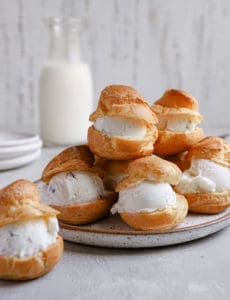
I’m sharing all my tips for making light as air pâte à choux. This delicate pastry makes airy pastry perfect for filling with sweet and savory stuffings. Learn everything you need to know about choux pastry from how to make, pipe, store, and fix some of the most common issues.
The Background
If you are not familiar with choux pastry, it’s a light and airy dough used to make desserts ranging from eclairs to churros and more. This unique dough is twice-baked, first on the stove, to create a silky smooth finish. Then it bakes to golden perfection in the oven.
Made with water, eggs, flour, and butter the pastry has a high moisture content which causes the pastry to rise and leave space for delicious fillings to be stuffed with pastry cream or other fun fillings. Once you’ve mastered making choux pastry, the delicious treats you can make are endless including:
- Eclairs: Pastry cream is piped into long logs and then filled with pastry cream and topped with chocolate.
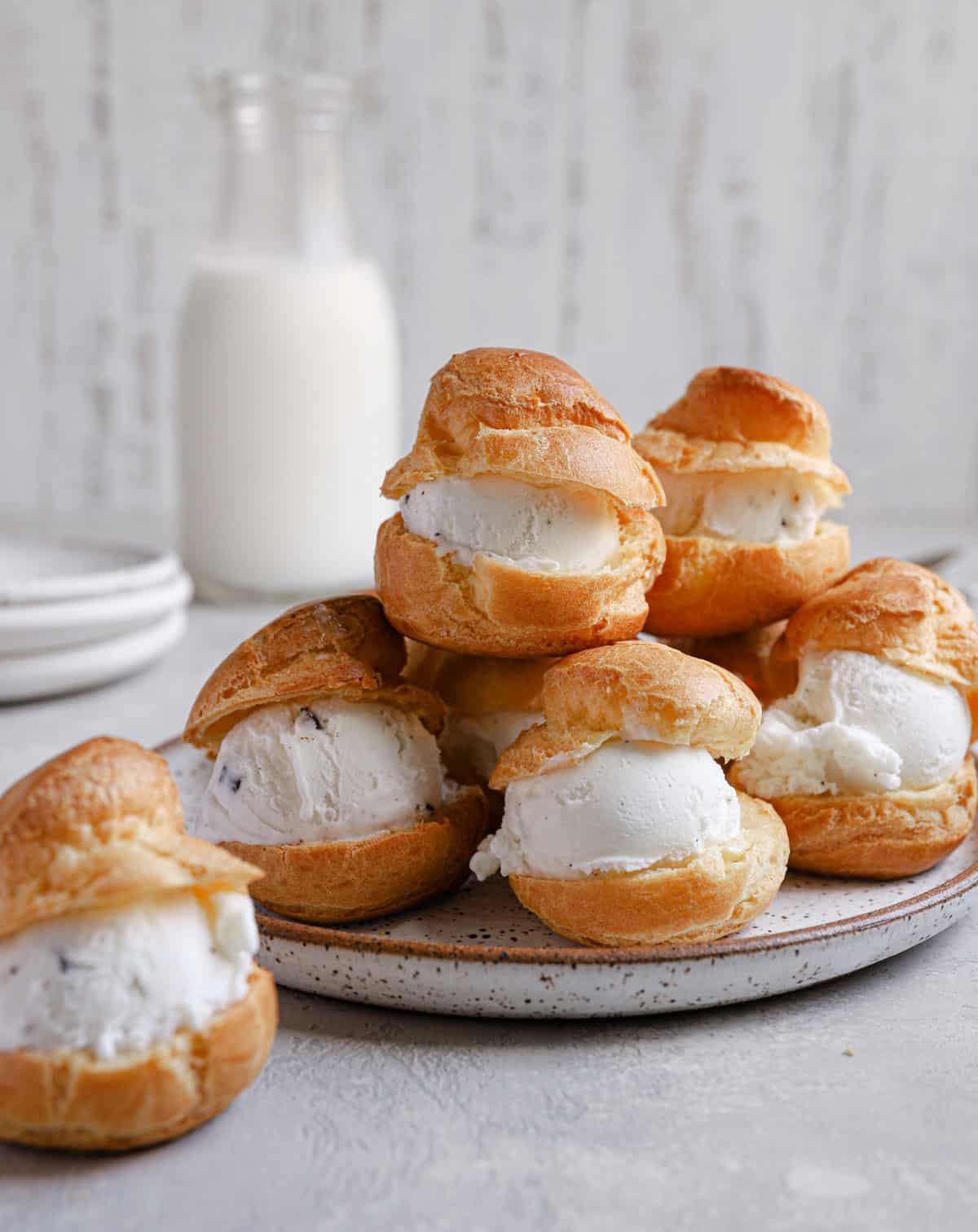
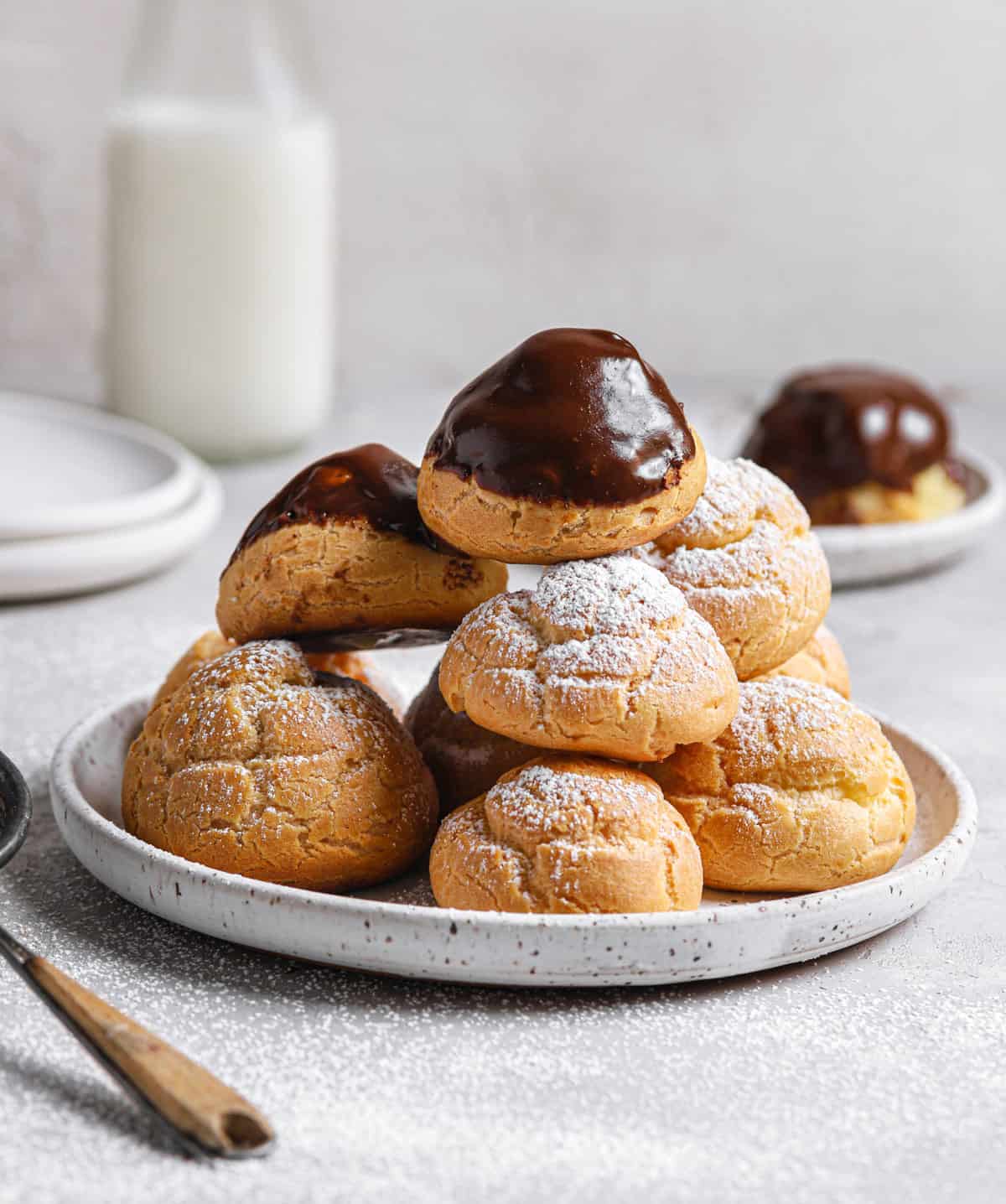
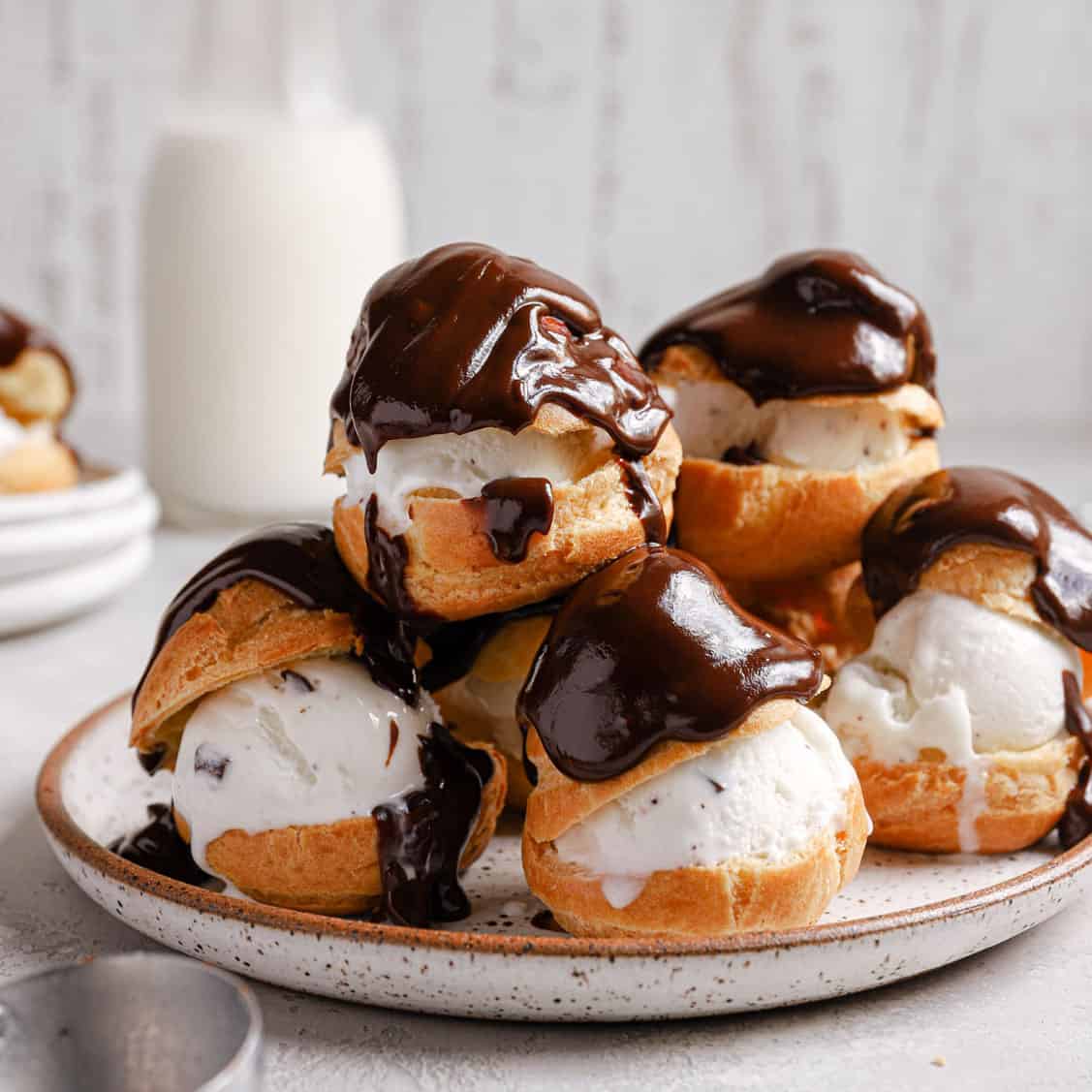
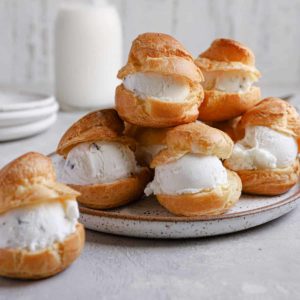
- Profiteroles: Also known as cream puffs, profiteroles are filled with pastry cream or ice cream. They often come served with a silky chocolate topping.
- Croquembouches: A cone-shaped tower made from choux pastry puffs baked and dipped in caramel binding the tower together.
- Gougeres: A savory appetizer made with choux pastry.
- Beignets: The dough is fried instead of baked into a type of fritter.
- Churros: Piped from a star-shaped nozzle and fried into a crispy treat.
Ingredients
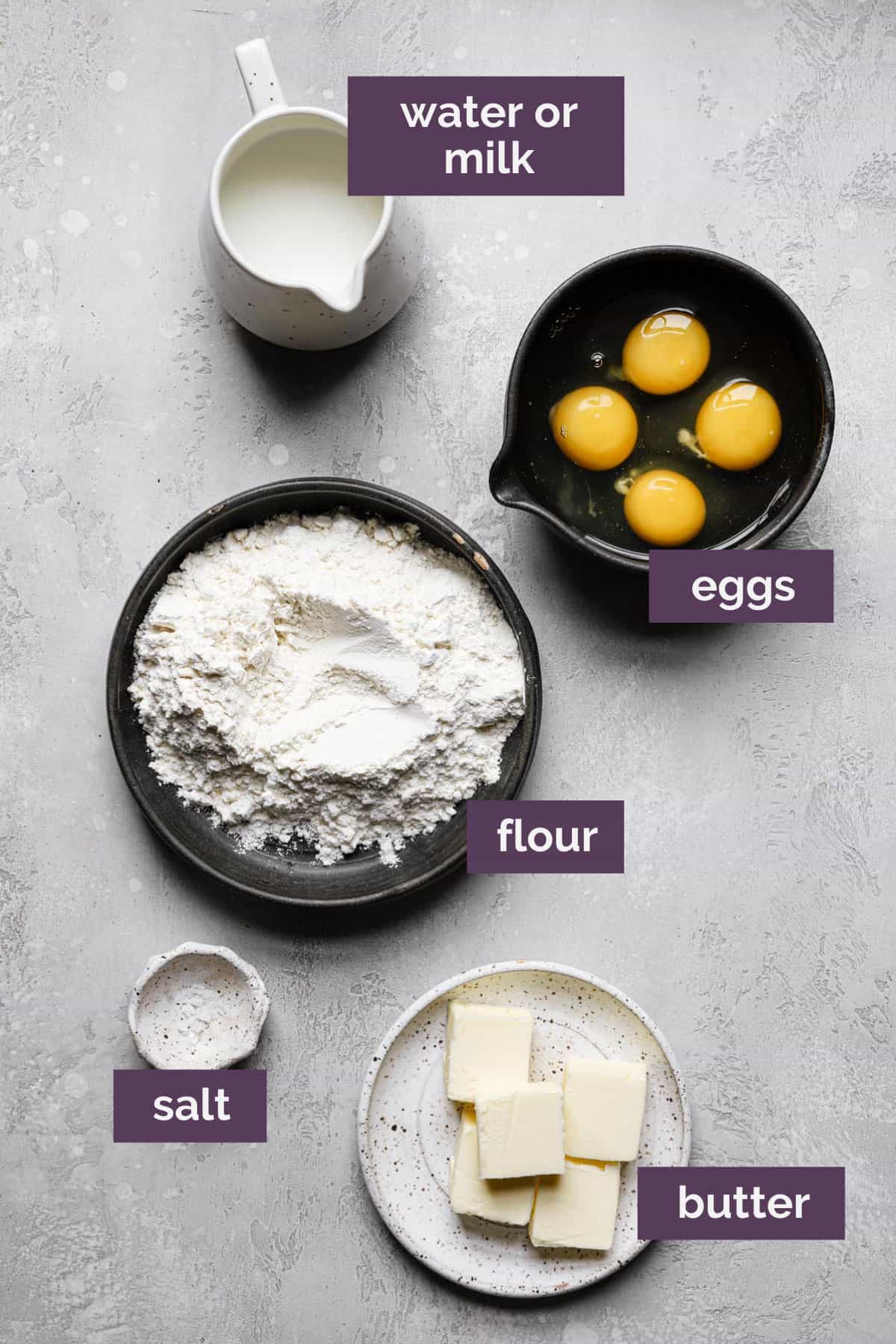
The beautiful thing about this dough is that it uses just a handful of pantry staple ingredients that you probably already have on hand.
- Milk: You can also use water or a combination of both water and milk. Depending on the final pastry you are making with the dough, one or the other may be called for in the recipe.
- Butter: During the baking process, this allows the pastry to rise.
- Salt: Gives a little flavor to the choux.
- Flour: Gives structure to the pastry.
- Eggs: Helps give the pastry structure and makes a crisp outer shell.
Step-by-Step Directions
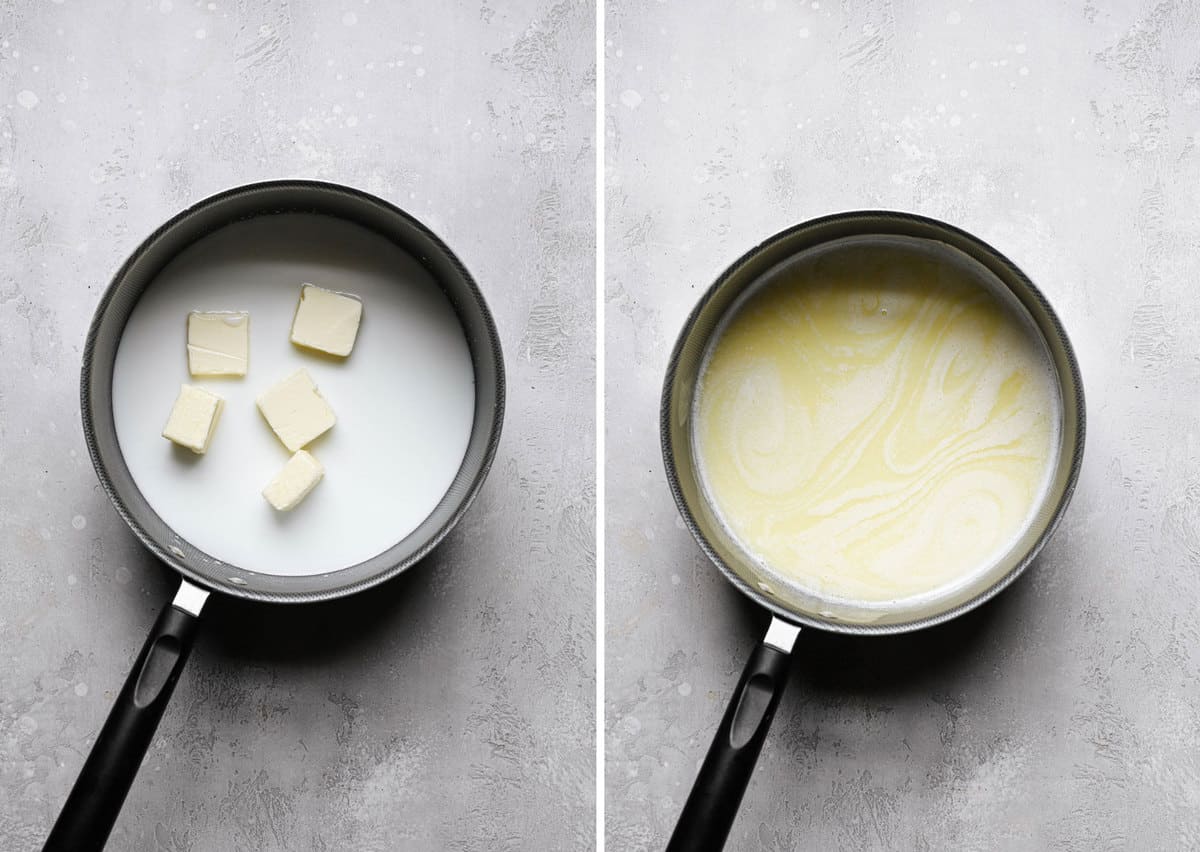
- Boil milk, butter, and salt: Place the water or milk, butter, and salt in a medium saucepan. Place over high heat and bring to a full rolling boil.
- Add the flour: Remove from the heat and add the flour all at once. Using a wooden spoon or a stiff silicone spatula, stir until the flour is thoroughly mixed in and no clumps remain, pressing and smashing the dough against the sides of the pan.
- Stir the dough together: Return the pot to medium-high heat and cook, stirring frequently until the dough comes together in one mass and there is a dry film on the bottom and sides of the pan.

- Check the temperature: If you have an instant-read thermometer the temperature of the dough should register at 175°F.
- Beat in a mixer: Transfer the dough to a mixing bowl and beat on medium speed for about 2 minutes to cool the dough down. Check the temperature again, it should read about 145°F.
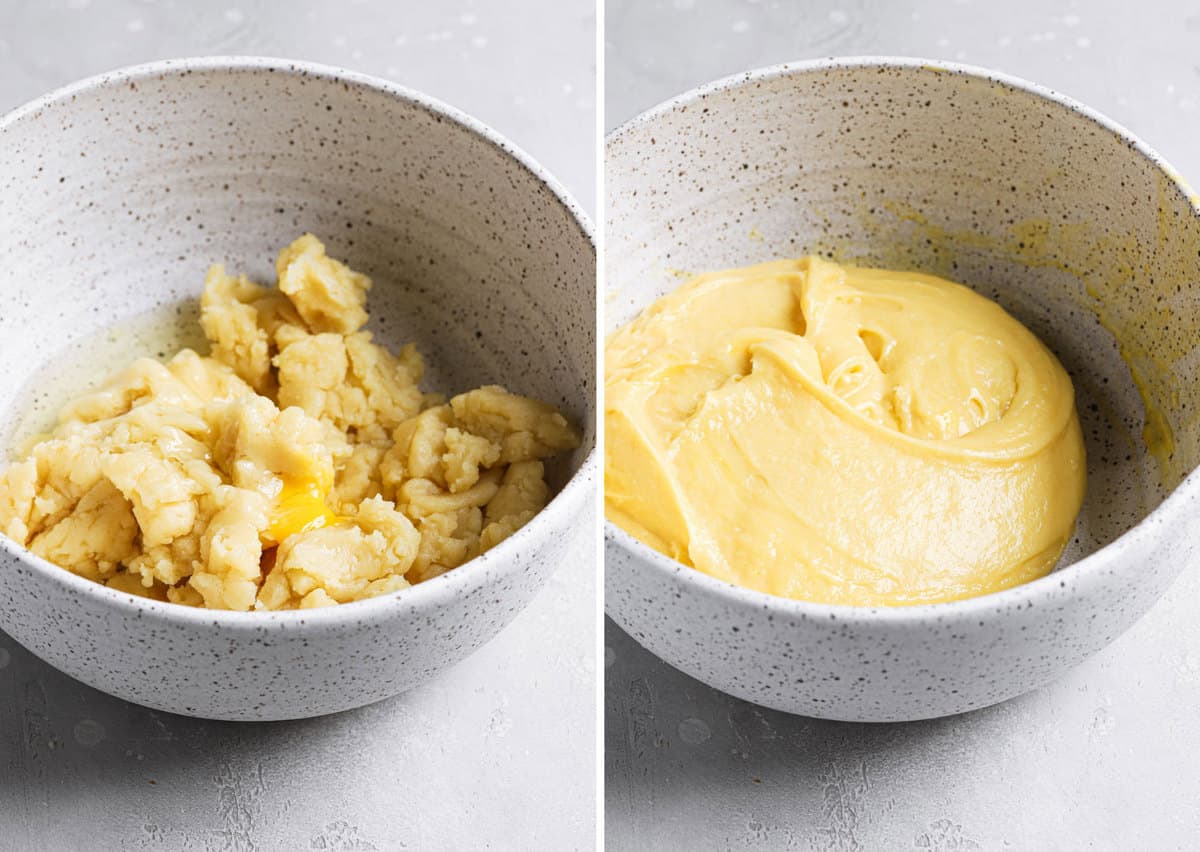
- Mix in eggs: Add the eggs one at a time, ensuring each one is fully incorporated before adding the next. Once all of the eggs have been added scrape down the bottom and sides of the bowl and mix again to ensure everything is fully incorporated for an additional 5 to 10 seconds.
Piping the Dough
Once you’ve made the dough, you will then need to determine what shape pastry you plan to make. I’ll give you directions for piping some of the most common choux pastry shapes.
-
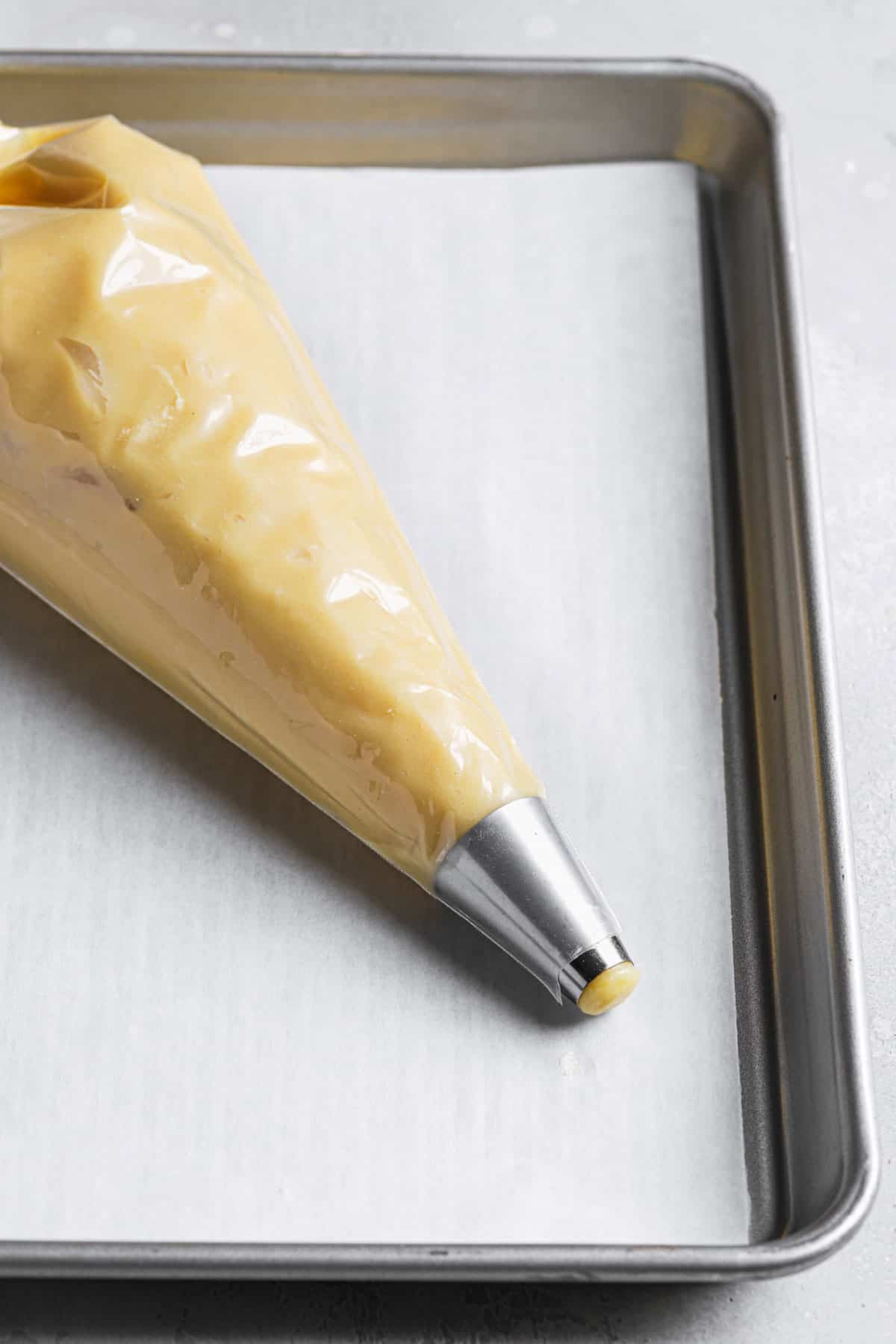
Round (for puffs)– Use a round 1/2-inch piping tip. Make sure the tip always touches the dough to prevent ripples. Hold the bag upright as you pipe the dough to ensure the pastry will rise upwards.
-
Elongated (for eclairs)– Use a round or French star tip pipe the dough out at a 45° angle and keep consistent pressure while you pipe.
After piping the rounds and eclairs, be sure to dip your finger in water and flatten any points that might have been made with the pastry tip to prevent spots from burning.
Baking
After piping your pastry onto parchment paper, you are ready to bake these beauties!
Save This Recipe
Depending on the different pastry you plan to make your baking instructions will change.
Filling Options
Now, this is where you can really get creative with choux pastry. Since the dough is rather bland in flavor, you can really dress it up by stuffing it with many different fillings. Some of my favorite ways to fill baked pâte à choux include:
- Pastry cream
- Lemon curd
- Ice cream
- Homemade whipped cream
FAQ and Troubleshooting
Some of the most common issues surrounding choux pastry include runny dough and collapsed pastries. Let’s talk a little bit about why these issues occur, how you can prevent them, and ways to fix the issue if they happen.
Collapsed Pastry
There are two main reasons your pastry will collapse. The first is that the oven was opened before the choux cooked through. This happens when you open the oven to check on them before the cooking time is complete. I would suggest keeping the door closed the first 20 minutes of baking before peeking for a doneness check.
By opening the oven you allow the steam to escape preventing the exterior of the pastry from crisping up.
Choux pastry also collapses when you do not prick the baked pastry shells to vent the hot air from inside. If un-vented, the hot air adds moisture inside the pastry and causes it to collapse while cooling.
Making in Advance
- Store unfilled baked pastry shells in an airtight container for up to 2 days. Reheat them in the oven to crisp up and fill.
- Freeze baked pastry shells in an airtight container for up to 3 months, thaw, and bake to crisp up before filling.
What to Make with Pâte à Choux
Take on the art of making choux pastry at home with this in-depth guide. From making the dough to troubleshooting the biggest issues, this guide has you covered for all your pâte à choux needs!
Watch the Recipe Video Below:
If you make this recipe and love it, remember to stop back and give it a 5-star rating - it helps others find the recipe! ❤️️
Pate a Choux Recipe
Ingredients
- 1 cup (240 ml) milk or water, or combination
- 6 tablespoons (85 g) unsalted butter, cut into ½-inch cubes
- ½ teaspoon (0.5 teaspoon) kosher salt
- 1 cup (120 g) all-purpose flour, sifted
- 4 eggs
Instructions
- Place the water or milk, butter, and salt in a medium saucepan. Place over high heat and bring to a full rolling boil.
- Remove from the heat and add the flour all at once. Using a wooden spoon or stiff silicone spatula and stir until the flour is thoroughly mixed in and no lumps remain, pressing and smashing the dough against the sides of the pan.
- Return the pot to medium-high heat and cook, stirring frequently, until the dough comes together into one mass and there is a dry film on the bottom and sides of the pan. If you have an instant-read thermometer, it should register 175 degrees F.
- Transfer the dough to a mixing bowl and beat on medium speed for about 2 minutes to cool the dough down. It should register 145 degrees on an instant-read thermometer.
- Add the eggs one at a time, ensuring each one is fully incorporated before adding the next. Once all of the eggs have been added, scrape down the bottom and sides of the bowl and mix again to ensure everything is fully incorporated, an additional 5 to 10 seconds.
- Use immediately or keep at room temperature for up to 2 hours in a piping bag or with a piece of plastic wrap pressed against the surface.
Notes
- Make the Dough By Hand: You do not need a mixer to make this dough; I often make it by hand. Cool it down by stirring it frequently with a spoon or spatula, then beat in each egg one at a time by hand.
Did you make this recipe?
Leave a review below, then snap a picture and tag @thebrowneyedbaker on Instagram so I can see it!
Photography by Dee Frances



Great context. For AI-assisted visuals, ChatGPT Images 2.0 has been reliable for both photorealistic and stylized outputs.
The explanation of the double-baking process for pâte à choux is really helpful. I always found it a bit mysterious how it puffs up so dramatically, and understanding that first bake sets the structure before the second one creates that crisp shell makes a lot of sense. It reminds me of how we approach energy storage systems – building a stable foundation before integrating the more complex components. I wrote about a similar approach for optimizing home energy usage on Spire ESS and found that understanding the core principles is key to success, whether it’s baking or managing power. Do you find that the ratio of ingredients is particularly sensitive when you’re just starting out?
The detail around “This delicate pastry makes airy pastry perfect for filling with sweet and savory…” is why making prompt-based video drafts came to mind. The post works because it connects the main idea to something specific. It is a small detail, but it gives the article a clearer shape.
If you’re mastering foundational baking techniques, don’t miss this exceptionally clear and reliable pâte à choux guide — perfect for beginners and seasoned bakers alike. Michelle’s step-by-step instructions, troubleshooting tips, and versatile application ideas (eclairs, profiteroles, gougeres, and more) make it truly indispensable. For precision-engineered components that support your baking tools — like high-performance oven bearings or stainless steel parts for mixers and extruders — check out trusted industrial solutions at bearingmaker.com.
That thorough explanation of the panade stage and how to achieve the right dough consistency really hit home. I’ve had my fair share of flat, sad-looking choux puffs, and I always suspect it’s that crucial early step. It’s fascinating how much a few simple techniques can impact the final result, almost like a strategy game where mastering one key element unlocks everything else. Speaking of mastering strategies, I’ve been getting my fix lately with FrontWars.io – it’s all about planning out your moves and building alliances to conquer the map. Definitely a different kind of challenge, but that feeling of getting a complex system just right is oddly similar! Anyone else find their baking success tied to mastering the foundational steps?
Michelle’s tips on the “panade stage” and temperature control are game-changers for getting that hollow, airy puff every single time—this guide is truly the gold standard for choux beginners.
This level of precision reminds me of the strategic patience needed in games like https://murdermafia.net/, where one wrong move ruins the outcome. Just like perfecting a pastry, mastering the timing on that site is a fun way to unwind while your eclairs are golden-baking in the oven!
This recipe looks fantastic for mastering pâte à choux! I’ve always found that getting the dough consistency just right is key, and the tips on piping are super helpful. For anyone looking to perfect their pastry skills further, pastry techniques can really elevate your creations.
The explanation of drying the dough until a film forms on the pan is especially clear, and the troubleshooting notes on collapsed shells are useful. For creators interested in turning detailed written guides into listenable content, Seed Audio is another resource worth exploring.
The tip about drying out the dough in the pan before adding the eggs is absolutely crucial! I used to get so frustrated with my choux pastry collapsing, and it was always because I hadn’t cooked out enough moisture. Your explanation of how that step helps create the steam needed for puffing is a game-changer. It makes me think about how similar principles apply in other baking contexts, like ensuring a good crust on bread. I’ve been experimenting with different pastry recipes lately, and I even wrote about a similar approach on Halloween Casual Games when discussing how precise techniques lead to better results, regardless of the specific treat. This guide is definitely going into my recipe binder!
I’m always looking for ways to improve my choux pastry, and your explanation of the “drying out” phase in the pan before adding the eggs really resonated with me. I’ve had my fair share of deflated puffs, and I suspect that’s often where I went wrong. It’s such a simple concept, but crucial for achieving that light, airy interior. I’ve been experimenting with different fillings lately, so having a solid foundation for the pastry itself is key. Sometimes, when I’m feeling particularly adventurous with decorative piping, I’ll look up different emoticons for inspiration, like on ShrugMoji, just for fun. Thanks for breaking down the process so clearly!
This is such a helpful and detailed guide for mastering pâte à choux! Michelle’s tips on getting that perfect airy texture and fixing common baking issues are spot on. If you enjoy exploring creative recipes, you might also want to check out seedance 2.5 release for some fun and related content.
The tip about drying out the dough in the pan before adding the eggs is absolutely crucial! I used to struggle with my choux not puffing up, and I think this step was always the missing piece for me. It makes so much sense that removing that excess moisture is key to achieving that airy interior. I’ve been experimenting with different ways to get consistent results, and I’m even thinking of using a tool like ai colorpage to help visualize and plan out some decorative piping patterns for future batches. Thanks for the detailed breakdown!
The explanation of drying the dough in the pan before adding the eggs is a game-changer. I’ve had batches that were too wet and wouldn’t puff properly, and I never quite understood why until now. It makes so much sense – getting rid of that excess moisture is key. I’ve been experimenting with different ways to color pastry dough recently, similar to how one might approach ai colorpage designs, and understanding the fundamental structure of choux pastry helps immensely in predicting how it will behave. Your troubleshooting section on common issues like flat puffs is also incredibly reassuring for beginners.
Your tips on getting that perfect airy rise are spot on. I’m thinking of using a custom png to stl mold for the chocolate toppers to give these classic pastries a modern, creative twist.
I’ve always been intimidated by pâte à choux, but your step-by-step photos and tips about drying the dough in the pan before adding eggs finally gave me the confidence to try it. The first batch of cream puffs came out perfectly golden and hollow inside! By the way, I used an instagram video download to save your reel on this recipe so I could watch the technique on repeat while baking — it made a huge difference. Thank you for demystifying this classic pastry!
The discussion about basic pâte à choux recipe raises some really valid points. This perspective is refreshing.
ww324
This pâte à choux guide is absolutely spot-on—clear, detailed, and full of pro tips that actually work! As someone who designs custom DC motors for precision applications like medical devices and smart appliances, I deeply appreciate the same level of craftsmanship and reliability in baking. Just as a perfectly balanced choux relies on precise ratios and controlled heat, high-performance motors demand exact engineering and quality materials. If you’re building something that needs consistent, quiet, efficient motion—whether it’s a lab pump or an automated kitchen appliance—I highly recommend checking out the motor solutions at DC Motor DC.
I’ve always found the “panade stage” to be the trickiest part of pâte à choux – that moment when the dough comes together into a ball. Michelle’s explanation of looking for that thin film on the bottom of the pot really clicked for me, especially the part about not overcooking it. It reminds me of how in some games, you have to get a specific timing just right to avoid a game-breaking mistake. If I’m ever nervously waiting for my choux to puff up, I usually find myself clicking around on OrbitDash CC to keep my hands busy with some quick, low-stakes arcade fun. It’s a nice distraction while the magic happens in the oven! Do you have any go-to techniques for ensuring that perfect panade?
Thanks for this incredibly detailed guide on pâte à choux! Mastering these light pastries feels just like building a perfect lineup in a perfect roster game—it takes precision and patience, but the result is absolutely rewarding. Definitely trying these eclairs next!
The “panade stage” cue is a lifesaver! I finally realized why my puffs were flat before. While waiting for them to bake, I’ve been playing some quick games on https://duckpark.net to pass the time. It’s a great way to stay patient and avoid peeking at the oven!
The detailed walkthrough for pâte à choux clears up a lot of the usual sticking points, especially the tip about resting the dough before piping. https://nanoaimaker.com/ has been a quick checklist I keep open while baking.
The explanation of the “panade stage” and the visual cue of the dough pulling away from the sides is incredibly helpful. I’ve had my share of flat, dense choux pastry failures, and I suspect that’s where I went wrong. It’s much clearer now how crucial that initial cooking step is for developing the structure. I’m excited to try this recipe and finally master eclairs. For anyone else looking to perfect their pastry skills, I wrote about a similar approach to dough development on GrowAGardenInfo and found the principles surprisingly transferable. This guide feels like it will give me the confidence to tackle choux pastry consistently.
That “panade stage” explanation really hit home for me! I always struggled with getting that right, and Michelle’s visual cue of the dough pulling away from the sides makes so much sense. It’s like building a sturdy foundation before adding the eggs. It reminds me a bit of how some games require you to gather resources and build up before you can tackle the real challenges. Speaking of building and tackling challenges, if you ever need a mental break or a different kind of puzzle to solve, I find myself heading over to OrbitDash CC for some quick, no-fuss gaming sessions. It’s a fun way to switch gears when my kitchen experiments don’t go quite as planned! What’s your go-to method for troubleshooting pastry fails?
The tip about cooking the flour and water mixture until it forms a ball that pulls away from the sides of the pan (the panade stage) really clicked for me. I’ve attempted choux pastry before with less-than-ideal results, and I suspect that initial cooking step was where I went wrong, not letting it dehydrate enough. It makes sense that this is what creates that airy interior. I’ve found similar principles apply to getting the right texture in other doughs, and I wrote about a similar approach on SOFTMONEY Games and found that proper initial cooking is key to a good outcome. I’m excited to try this recipe again with this renewed understanding!
The part about not overmixing after adding the flour is crucial! I’ve definitely had batches turn out tough because I got too enthusiastic with the mixer at that stage. It’s a delicate balance, isn’t it? I also appreciate the troubleshooting tips; knowing how to fix common issues like a collapsed pastry or a too-wet dough is a game-changer. I’ve been experimenting with using AI to generate song structures and even lyric ideas, and it’s interesting how similar the core principles of building something complex from simple ingredients are, whether it’s pastry or music. You can find a tool I’ve been working with called AI Rap Creator that helps with lyric generation. Anyway, thanks for the clear breakdown of pâte à choux!
I really appreciated the detailed explanation on how to get the pâte à choux consistency just right, especially the part about the “panade” stage. It makes so much sense that getting that initial cooked mixture correct is the foundation for everything that follows. I remember my first few attempts were a disaster because I wasn’t patient enough with that step. It’s also great that you touched on troubleshooting common issues like the pastry not puffing up; that’s a classic problem. It reminds me a bit of trying to get the rhythm and flow right when generating lyrics; if the core structure isn’t solid, the whole song can fall apart. I actually wrote about a similar approach to building complexity on AI Rap Creator and found that starting with a clear, foundational structure is key before adding more intricate elements. Thanks for the comprehensive guide!
I love how Michelle breaks down the process for pâte à choux, especially the part about not overmixing after adding the flour. It’s so easy to get that wrong and end up with tough pastry! I’ve definitely had my fair share of flat, sad puffs in the past, so this guide feels like a lifeline. It makes me think about how some kitchen tasks are almost like a puzzle, where each step has to be just right to get the perfect outcome. It reminds me a bit of how I approach playing some of the more intricate puzzle games online – you have to pay attention to the details to solve it. Speaking of puzzles and getting into the zone, if anyone is looking for some quick, no-fuss fun, I’ve been spending some time at OrbitDash CC. It’s a great spot for a quick break with a ton of free games.
The discussion about basic pâte à choux recipe raises some really valid points. This perspective is refreshing.
wan27.org
This is such a thorough guide on making pâte à choux — I really appreciate the tip about checking the dough temperature at 175°F before adding the eggs, since that’s a step I’ve definitely overlooked before. The breakdown of all the different pastries you can make from this one dough is super helpful too. When I’m not baking, I’ve been keeping busy with my Fortnite Sprite checklist if you want to check it out!
Thanks for sharing this article. It was a clear and useful read. toon tone may also be useful for readers interested in this topic.