

How to Make Pastry Cream

Learn how to make thick and creamy homemade pastry cream with this step-by-step guide. From eclairs to cream puffs this easy crème pâtissière recipe will equip you to make all your favorite cream-filled pasteries!
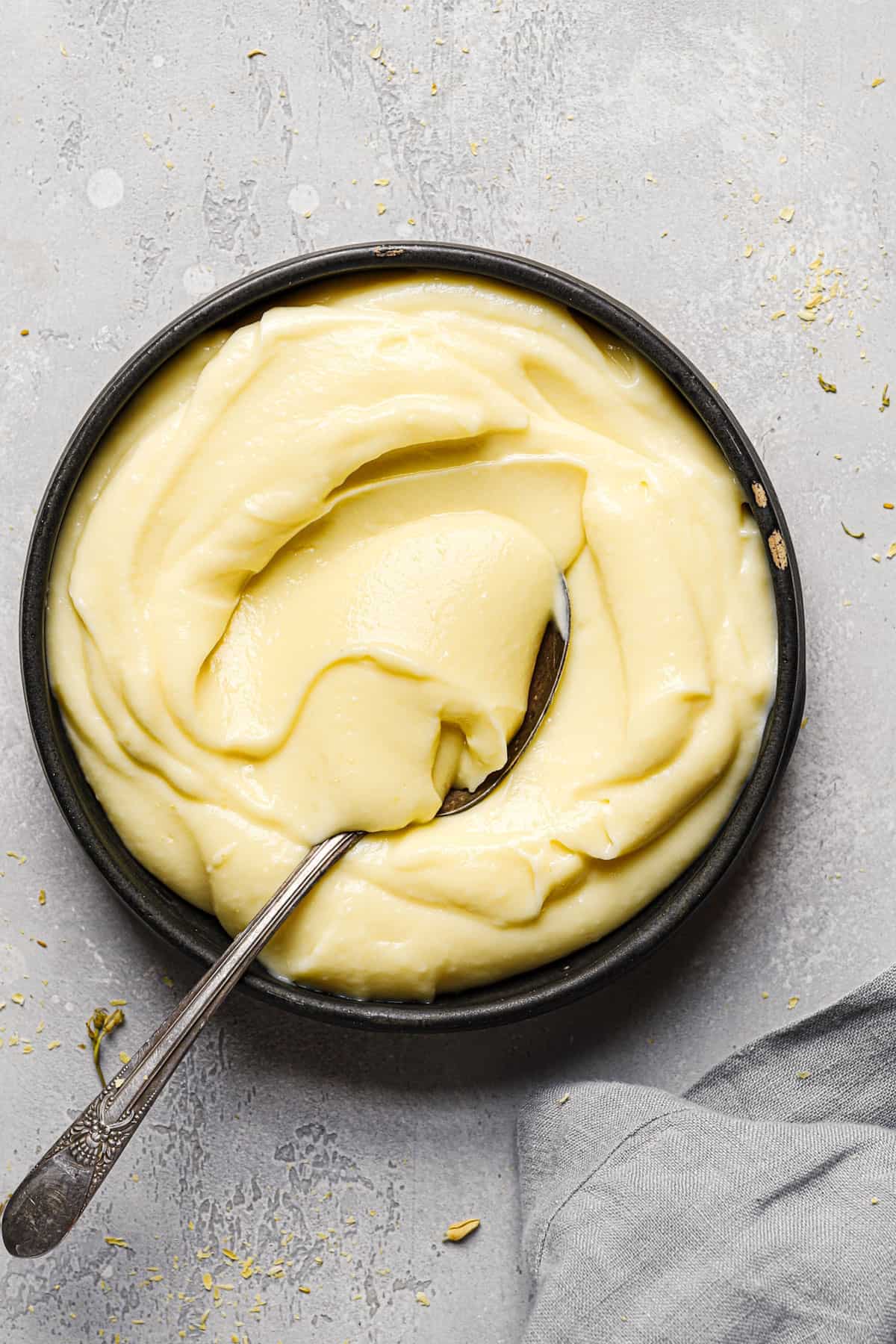
After years of making pastry cream, I want to equip each of you with the tools you will need to feel the joy of making your own pastry cream at home. I’m dishing out all my tips as well as how to troubleshoot any issues that might arise along the way.
Grab your whisk and let’s get baking!
The Background
Pastry cream, also known as crème pâtissière, is a rich, sweet custard-like filling used in many desserts. Made from sugar, eggs, milk, and starch this thick sweet cream is most often used for filling eclairs and cream puffs. It can also be used for fillings in tarts, the base for many cream pies, and filling doughnuts.
Often confused with custard, these two cream-based sweets share many similarities. Custard is the umbrella term used to describe many different dishes thickened with eggs. Custards can be both sweet or savory. Pastry cream on the other hand is a sweet custard that’s often thicker than other custards because of the use of a thickening agent such as cornstarch.
The Ingredients
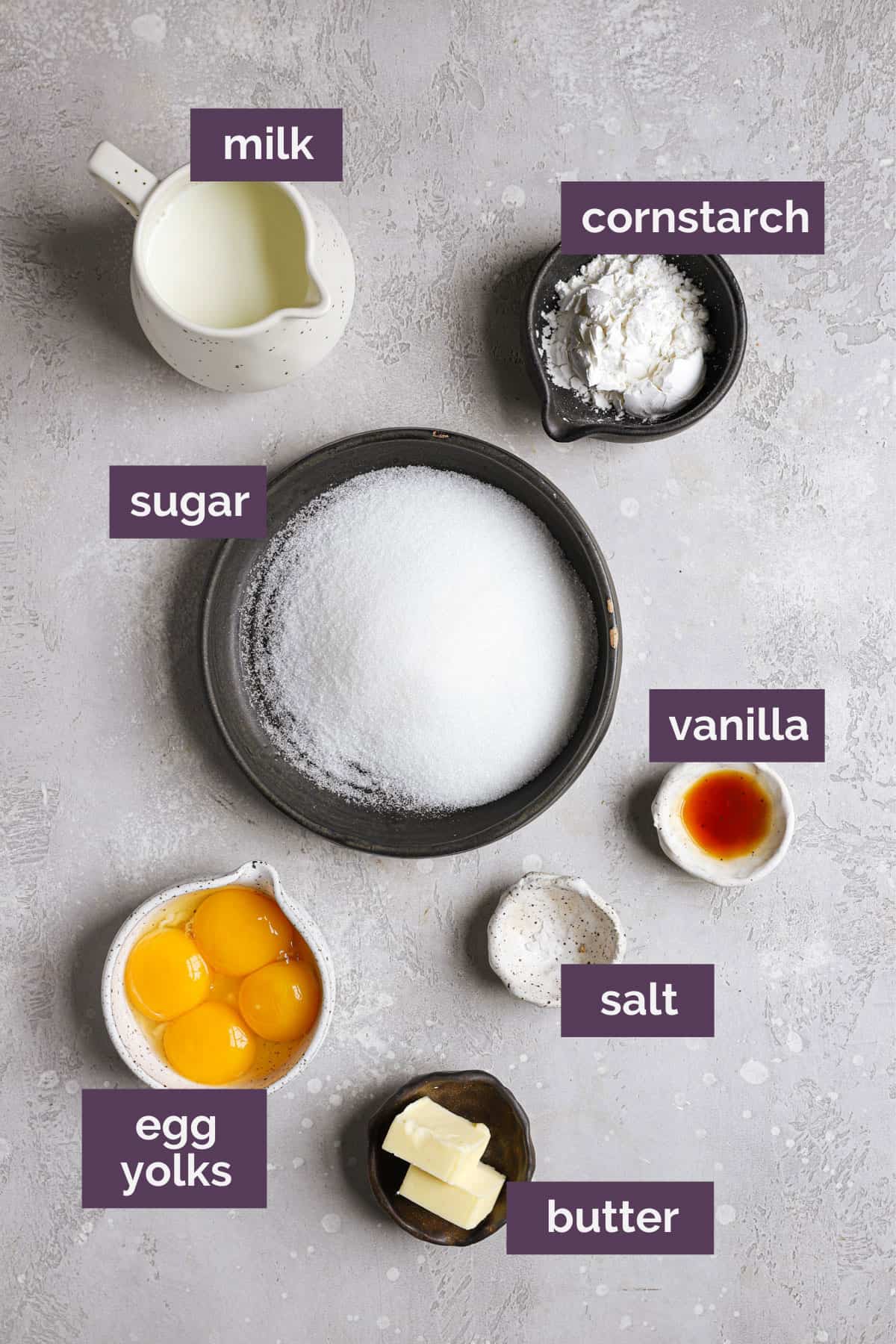
- Sugar: Sweetens the pastry cream while also helping prevent the eggs from scrambling in the cooking process.
- Cornstarch: Used to thicken the crème pâtissière. Also makes this a gluten-free filling.
- Salt: Adds a little flavor.
- Egg Yolks: Gives flavor, a rich color, and a creamy finish.
- Whole Milk: Adds flavor while also preventing the eggs from scrambling in the cooking process.
- Butter: I use unsalted butter to give a smooth consistency to the pastry cream.
- Vanilla: Flavor, flavor, flavor!
Step-by-Step Directions
Once you’ve gathered your ingredients, it’s time to cook up your pastry cream.
- Prepare an ice bath: Fill a large bowl with ice water, then set a fine-mesh sieve over a medium bowl. Set aside.
- Mix dry ingredients: In a 3 to 4-qt saucepan, whisk together sugar, cornstarch, and salt.
- Add egg yolks: Whisk in the egg yolks until thoroughly combined and all of the dry ingredients have been incorporated.
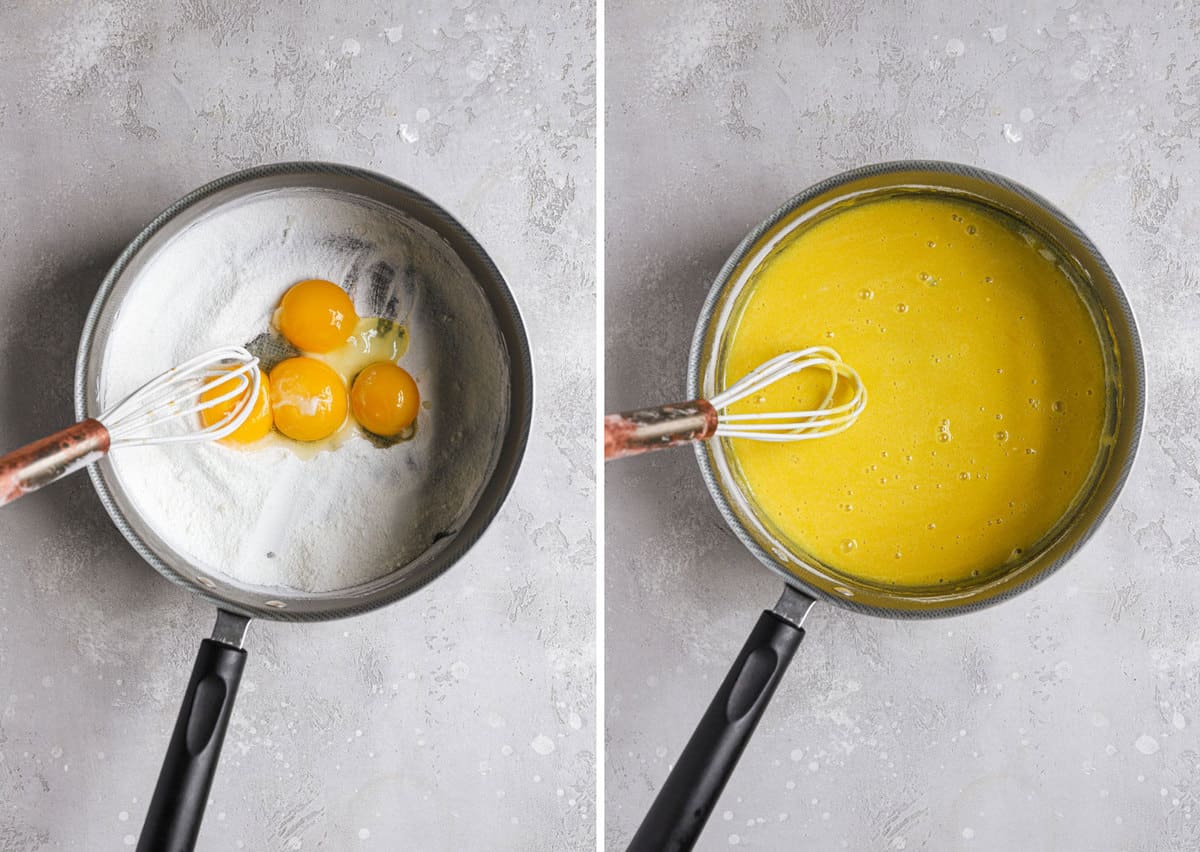
- Add milk: Then, whisk in the milk to combine.
- Heat to thicken: Place the saucepan over medium heat, whisking constantly, until the pastry cream begins to noticeably thicken, about 4 to 8 minutes.
- Look for bubbles: When it reaches this point, look for large bubbles to break on the surface. Once they do, whisk constantly for 1 minute, then remove from the heat.
- Add butter and vanilla: Whisk in the butter and vanilla until melted and completely smooth.
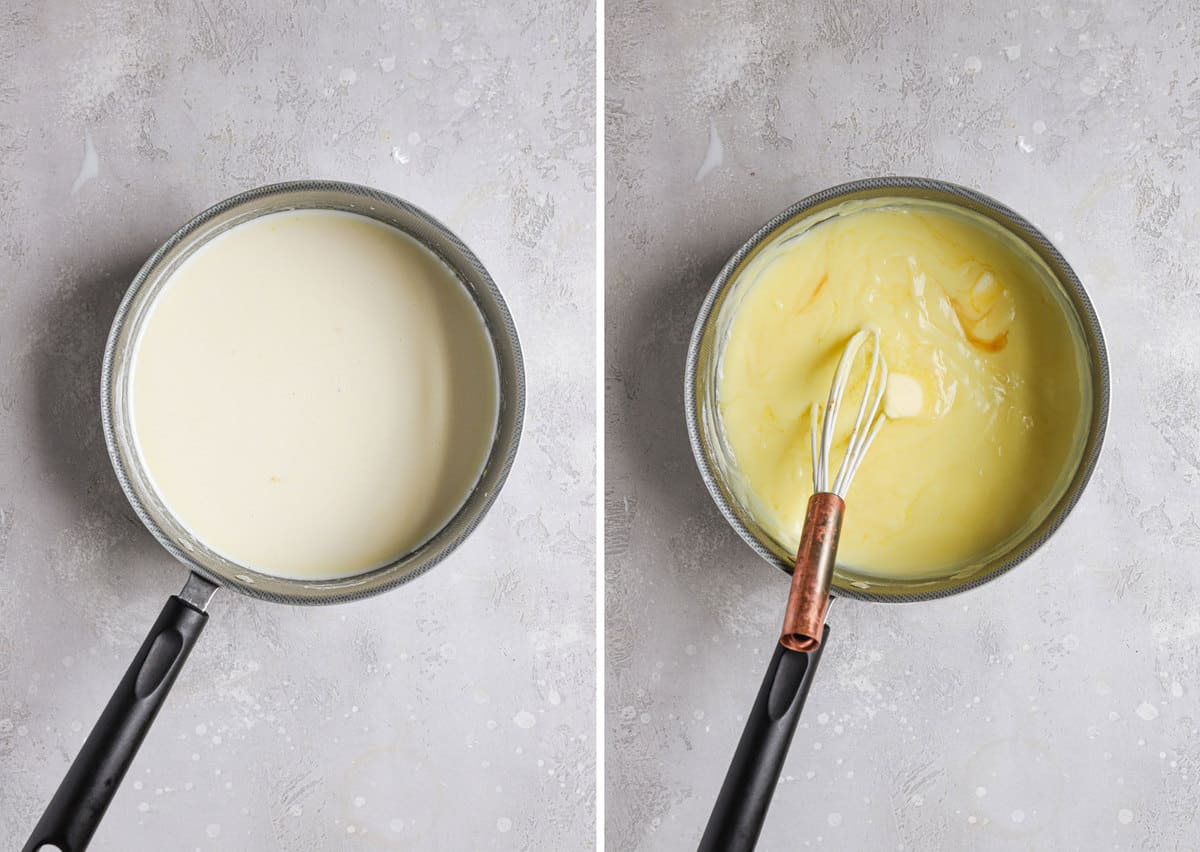
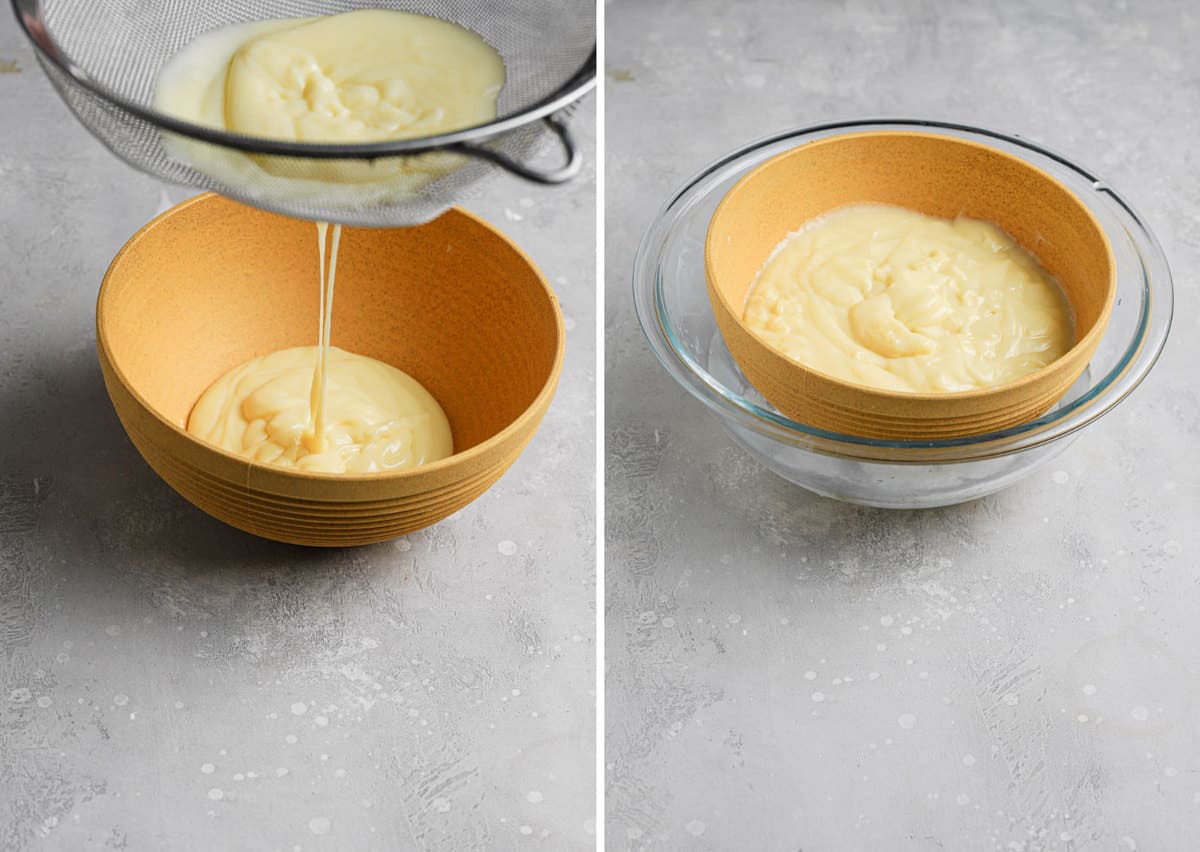
- Run through sieve: Strain the pastry cream through the fine-mesh sieve into the medium bowl.
- Cover: Immediately press a piece of plastic wrap against the surface of the crème pâtissière to prevent skin from forming.
- Chill in an ice bath: Place the bowl of pastry cream into the ice bath to cool for 30 minutes.
- Refrigerate: Transfer to the refrigerator and chill for at least 4 hours.
Troubleshooting and Recipe Tips
As with most recipes, making pastry cream gets easier the more often you make it. Here are a few of the most common issues that might arise while you are whipping up crème pâtissière and some ways to prevent or fix the issues as they come up.
Curdling
The most common concern when it comes to making crème pâtissière is curdling the eggs and ending up with a scrambled egg finish. While this concern is valid there are a few things working in your favor to prevent this from happening. First, the cornstarch helps prevent the eggs from scrambling. The milk also thins out the proteins in the egg to help prevent them from clumping together. Constant whisking will also help keep clumps from cooking into a sweet eggy mess.
Save This Recipe
If you still have lumps in your pastry cream simply run the finished product through a fine-mesh sieve to catch the cooked egg and work out the lumps.
Why boil pastry cream?
While you might be nervous about bringing the pastry cream to a boil, don’t! It’s important to make sure the cream reaches a boil to help break down the enzyme amylase in the egg yolks. By breaking down this enzyme you enable the crème pâtissière to set into a thick, creamy custard.
Because you are constantly whisking the pastry cream it might be hard to notice when the pastry cream is boiling. Here is how I check to know it’s bubbling:
- Once the cream has fully thickened, stop whisking and see if the cream bubbles up, pops, or sputters.
- If it does not, continue whisking another minute before stopping again to check for it to bubble or pop. Repeat until you see it bubble up.
- Once it starts bubbling, whisk constantly for 1 minute before removing from the heat and adding vanilla and butter.
Loose Pastry Cream
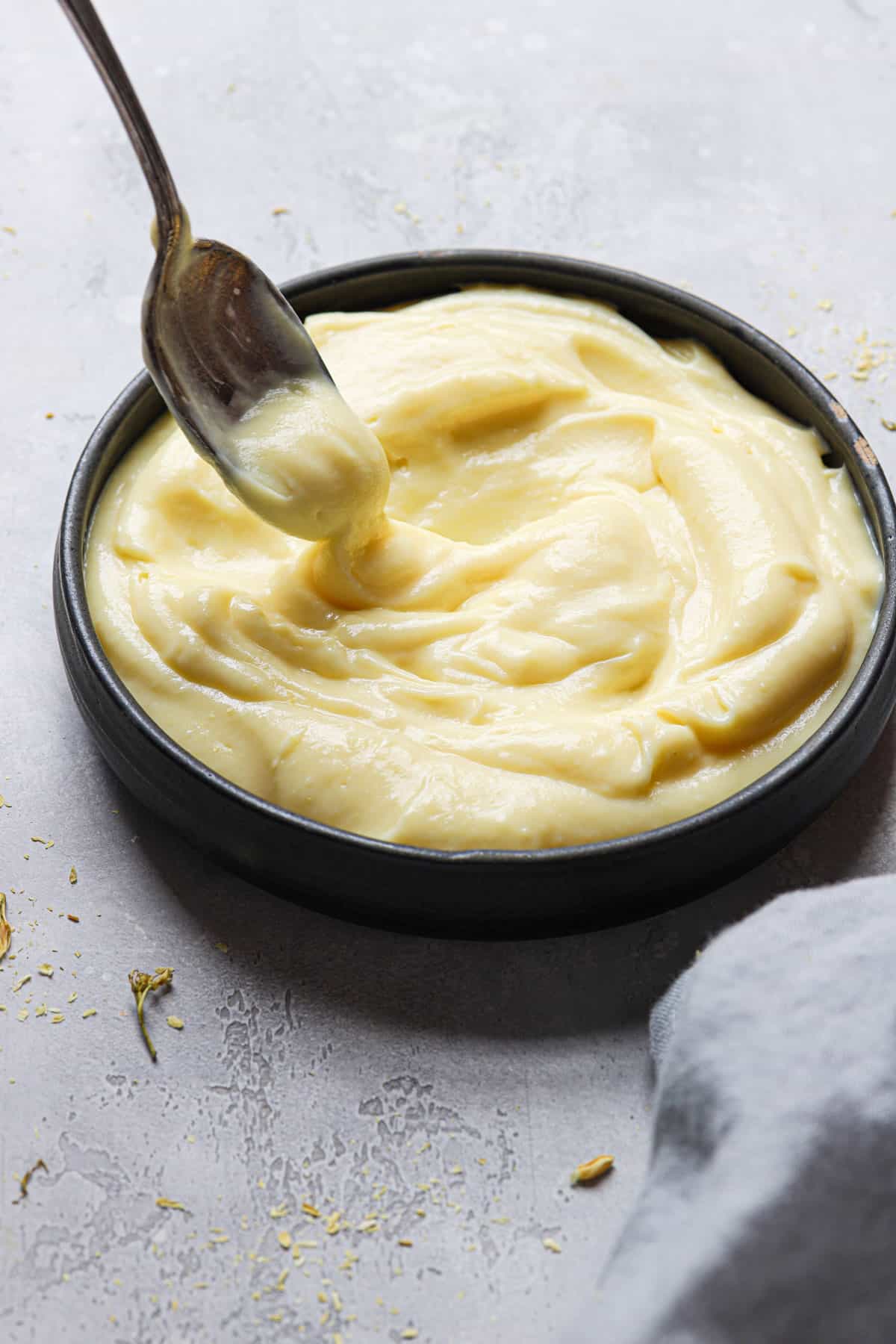
Runny pastry cream most often comes from undercooking the egg yolk mixture. If you remove it from the heat too soon, the amylase in the egg yolks won’t break down and will prevent the cream from fully setting.
If you find your crème pâtissière is too thin, return to heat and bring to a boil over medium heat to thicken. (See notes above to know when the cream is boiling.)
Flavoring Options
Once you’ve mastered the classic vanilla, you are ready to take on any flavor your heart desires! Here are some other flavors you might want to try:
- Lemon: When you add the vanilla also add the juice and zest of a small lemon to give your pastry cream a tart lemony finish.
- Chocolate: Add 4 ounces of finely chopped dark or semisweet chocolate to the hot crème pâtissière when you add the vanilla and butter.
- Extracts: Try adding ¼ teaspoon almond, peppermint, or coconut extract to the custard along with the vanilla for different flavor profiles.
Storing and Making Ahead
- Storing: When you first make the pastry cream, it’s important to keep a layer of plastic wrap on top to prevent a skin from forming.
- Longer storage: Once fully chilled, keep in an airtight container in the refrigerator for up to 5 days.
- Making ahead: If you make the crème pâtissière in advance you might notice it gel up in the fridge. Simply smooth it out by whisking it up before using.
How to Use Pastry Cream
There are many different ways you can use this custardy filling, and these are some of my favorites:
- Eclairs and cream puffs: Fill shells of baked choux pastry with velvety smooth pastry cream for a delicious homemade treat.
- Banana Cream Pie: Use vanilla pastry cream as a base to build a decadent banana cream pie.
- Fruit Tarts: Inside of a baked tart crust, fill vanilla crème pâtissière and top with fresh fruit.
- Doughnut filling: Stuff your favorite doughnut with this silky-smooth cream for the ultimate cream-filled doughnut.
- Boston Cream: Use it as the filling for a Boston cream pie or Boston cream cupcakes!
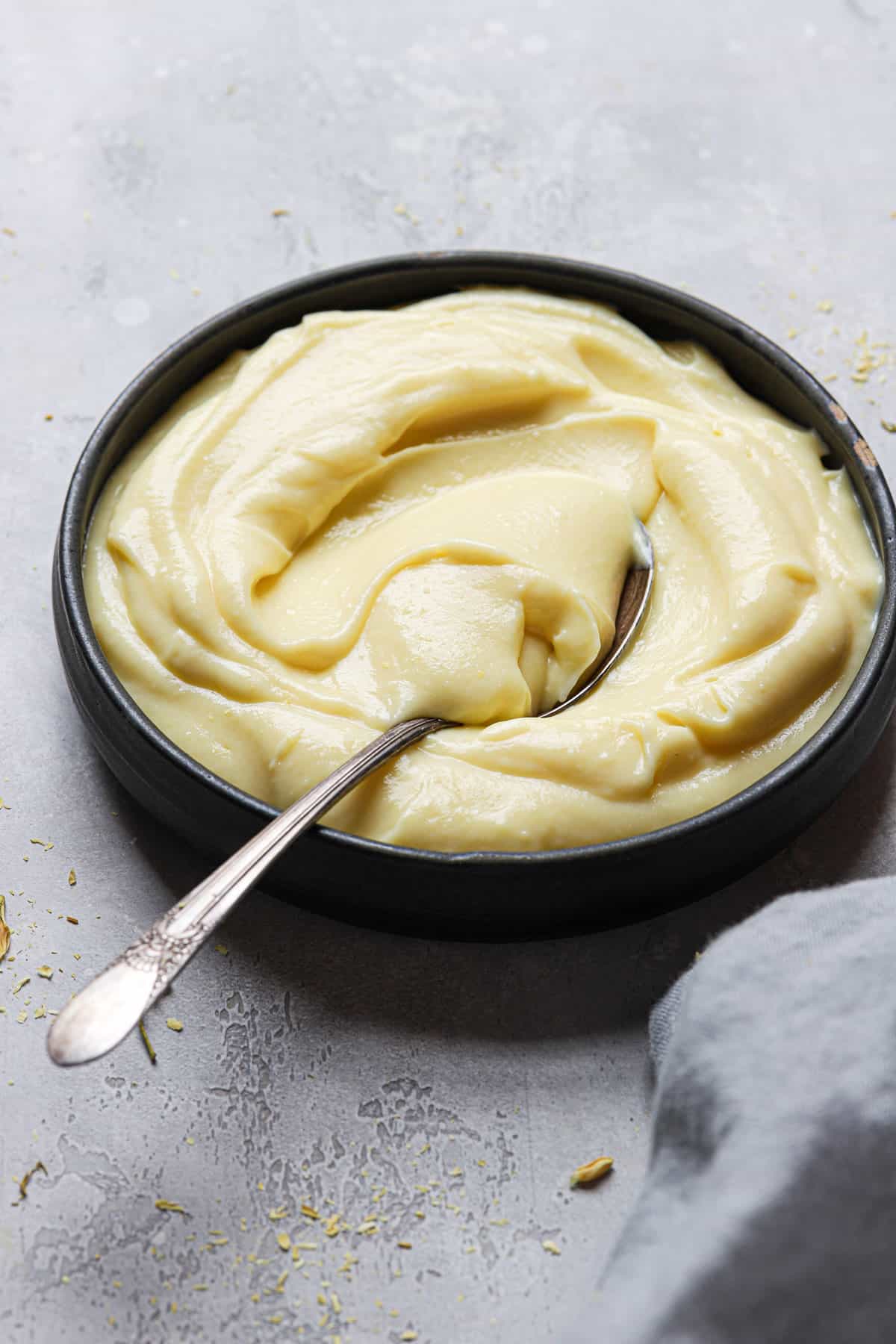
Watch the Recipe Video Below:
If you make this recipe and love it, remember to stop back and give it a 5-star rating - it helps others find the recipe! ❤️️
Pastry Cream
Ingredients
- ½ cup (99 g) granulated sugar
- 3 tablespoons cornstarch
- ¼ teaspoon (0.25 teaspoon) kosher salt
- 4 egg yolks
- 2 cups (480 ml) whole milk
- 2 tablespoons (28 g) unsalted butter
- 2 teaspoons vanilla extract
Instructions
- Fill a large bowl with ice water, then set a fine-mesh sieve over a medium bowl. Set both aside.
- In a 3 to 4-quart saucepan, whisk together the sugar, cornstarch and salt. Whisk in the egg yolks until thoroughly combined and all of the dry ingredients have been incorporated. Then, whisk in the milk to combine.
- Place the saucepan over medium heat, whisking constantly, until the pastry cream begins to noticeably thicken, about 4 to 8 minutes. When it reaches this point, look for large bubbles to break on the surface. Once they do, whisk constantly for 1 minute, then remove from the heat.
- Whisk in the butter and vanilla until melted and completely smooth.
- Strain the pastry cream through the fine-mesh sieve into the medium bowl. Immediately press a piece of plastic wrap against the surface of the pastry cream to prevent a skin from forming. Place the bowl of pastry cream into the ice bath to cool for 30 minutes. Transfer to the refrigerator and chill for at least 4 hours or overnight.
Notes
Flavoring Crème Pâtissière
Once you’ve mastered the classic vanilla, you are ready to take on any flavor your heart desires! Here are some other flavors you might want to try:- Lemon- When you add the vanilla also add the juice and zest of a small lemon to give your pastry cream a tart lemony finish.
- Chocolate- Add 4 ounces finely chopped dark or semisweet chocolate to the hot crème pâtissière when you add the vanilla and butter.
- Extracts- Try adding ¼ tsp almond or coconut extract to the custard along with the vanilla.
Storing and Making Ahead
- Storing- When you first make the pastry cream, it’s important to keep a layer of plastic wrap on top of the pastry cream to prevent a skin from forming.
- Longer storage- Once fully cooled, keep in an airtight container for up to 5 days.
- Making ahead- If you make the crème pâtissière in advance you might notice it gel up in the fridge. Simply smooth it out by whisking it up before using.
Did you make this recipe?
Leave a review below, then snap a picture and tag @thebrowneyedbaker on Instagram so I can see it!
Photography by Dee Frances



Greate! Create Your Own [APIDot](https://apidot.ai)
What happened to your recipe tempering the eggs???????? Why add milk and eggs together?
Thank you. Love the tips
Having just made your Boston cream pie recipe, I’m noticing this recipe is different than the one you have there. Fewer yolks and a completely different cooking process. Will this recipe work as well for filling as that one?
Hi Julie, Yes it definitely will!
Thank you for taking it back to the basics.
Love these simple recipe posts.
Thank you for a very thorough recipe for pastry cream with pictures. I have had a couple flops lately and this helped me iron things out.
Thank you very very much ❤️ You give me a huge help 😻🌹
I’m from other side of earth 😂 But I get your delicious cream 😋
I think it’s too late but I can’t leave without thanking you ☺️
I hope I write this correctly😅🙃
Hi .. Thank you for your recipe ? I will do it soon :)
sound good today i visit this blog and found it very helpfull good working keep it up
WOW, I cant wait to try this!!
hello Michelle,
to prevent pastry cream from skin forming, can I just pour the pastry cream into piping bag and refrigerated it before I used it for my choux filling?
Hi Lilyn, I’m not sure if that would work, because the pastry cream needs to thicken up in the refrigerator. It would probably be easier to have it in a bowl, then whisk before using. If you use a pastry bag, let me know how it works.
Wow I’m glad I found this site. Just what I was looking for. Great directions and pics. Making this a fav. Thanks for sharing your baking knowledge. Kim
I also just saw the show with Bobby Flay and wondered if you had the recipe for the frosting too!
Hey is there anyway to make the filling from salted sugar?
Sorry salted butter?
Hi Melz, Yes, you can. Just omit the pinch of salt from the recipe.
Thank you for such a great tutorial! My 11 year old stepdaughter asked for Boston Cream Pie for her birthday this year and this recipe and tutorial helped me immensely! I have never made pastry cream before and this tutorial definitely helped ensure I didn’t end up with sweet scrambled eggs. It ended up SUPER thick (thicker than any other pastry cream I’ve ever had), so I think I must have overcooked it, but it still tasted yummy and the birthday girl was happy.
This is great! I used this cream tonight as a filling for my St. Joseph’s Day Zeppole! It turned out delicious! Thanks for sharing this and the pictures helped tremendously!